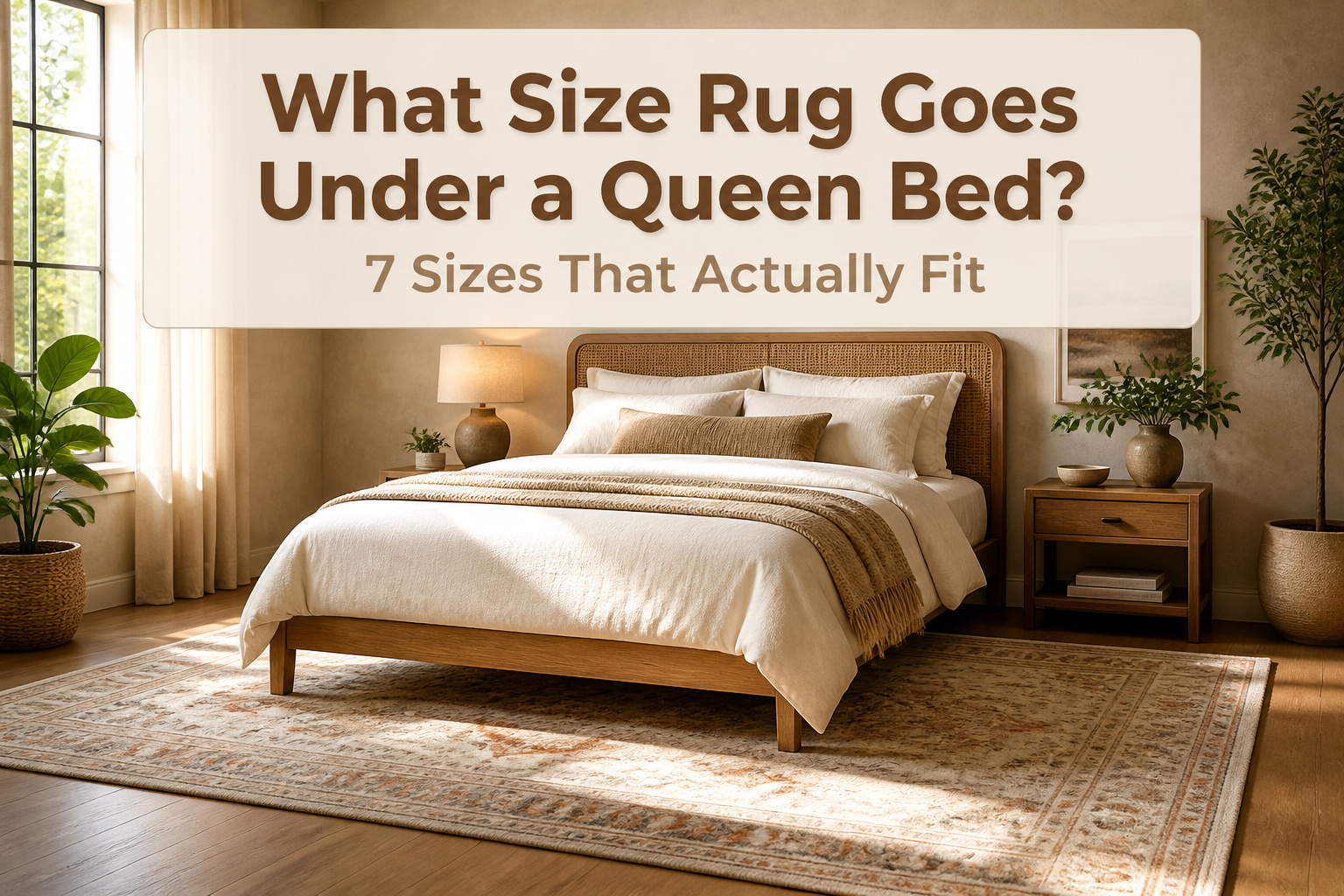
An 8×10 or 9×12 foot rug does the job under a queen bed, but only if your room is large enough to let it breathe. In anything under 11 by 13 feet, that same 8×10 swallows the walking path and starts to look like wall-to-wall carpet that shrank in the wash. A queen mattress alone runs 60 inches wide and 80 inches long, so the rug has to extend past those dimensions or it reads as a bath mat trapped under the frame.
What Size Rug Goes Under a Queen Bed

The most commonly recommended sizes are 8×10 and 9×12 feet, with 6×9 working for tighter spaces and 5×7 as the absolute minimum. A queen mattress measures 60 inches wide and 80 inches long, so the rug needs to extend past those dimensions to avoid looking like a bath mat trapped under the bed.
The full list this article covers runs from 4×6 and 5×7 accent rugs up through 5×8, 6×9, 8×10, and 9×12, plus runners for narrow rooms. Getting the size right matters for two reasons you feel every morning: bare feet hitting cold floor versus landing on something soft, and the visual weight that keeps the bed from floating like an island in an empty room. Too small and the rug disappears under the frame; too large and you are ordering custom cuts or folding edges under themselves.
The goal is to ensure that (at minimum!) the foot of the bed is nestled on top of a rug.
That minimum is where I start measuring, because everything else builds outward from whether your toes find wool or hardwood first.
Recommended Products

Timeless Vintage Floral Design: Our 8×10 area rug features a stunning central floral medallion surrounded by intricate borders. Its elegant grayscale palette adds classic charm and understated luxury, perfect for living rooms, bedrooms, dining areas, or home offices

Soft Comfort & Certified Materials — Made from soft 100% polyester carpet material certified to OEKO-TEX STANDARD 100, this washable rug offers a cozy, comfortable feel underfoot. Available in compact, runner, and room-size options, it adds warmth to entryways, hallways, bedrooms, home offices, living rooms, and dining areas. Inviting for barefoot use and active households, it brings together everyday comfort, versatile style, and trusted material standards.
4×6 Rug
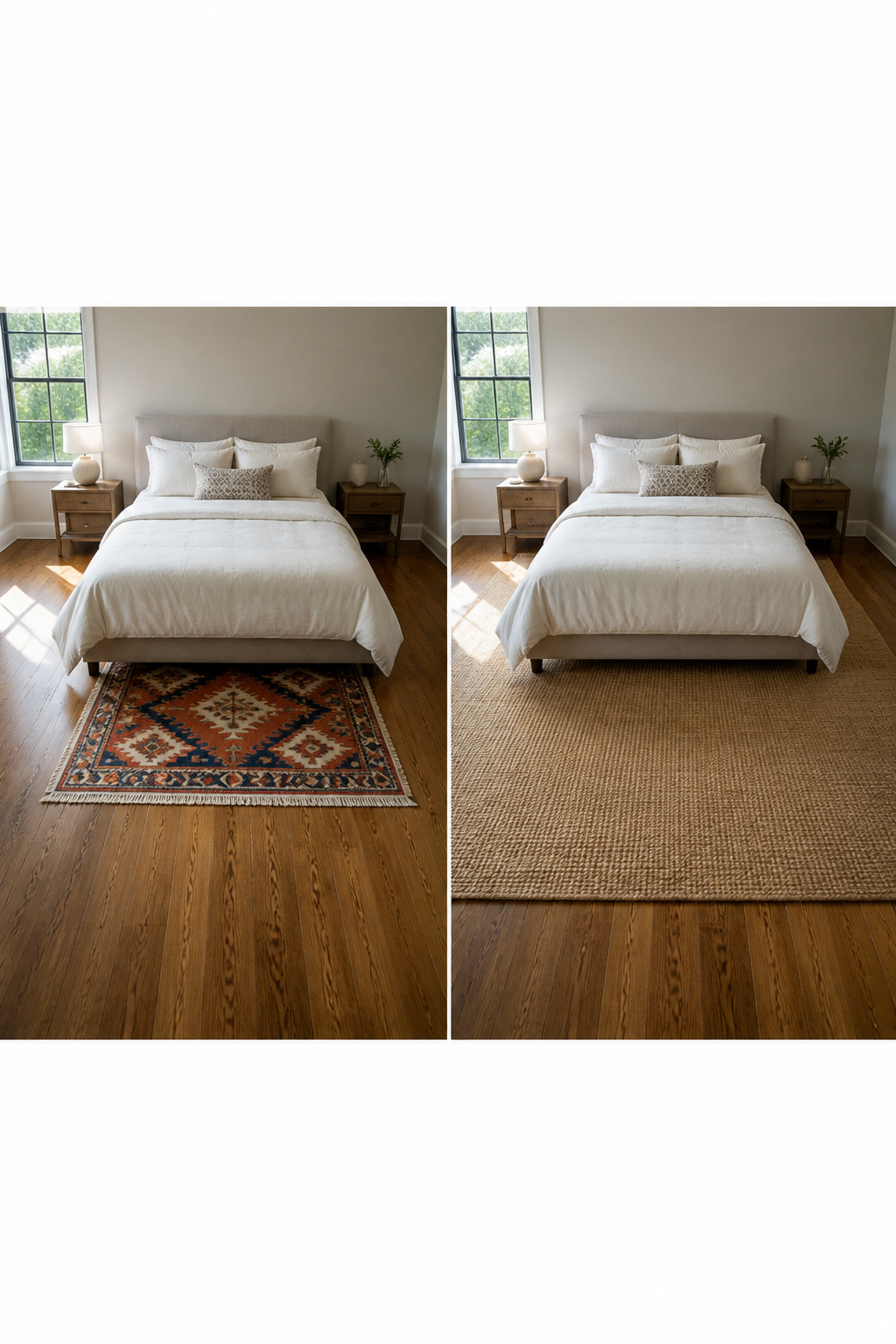
A single 4×6 rug under a queen bed leaves too much bare floor on all sides to anchor the room. The mattress alone runs 60 inches wide, so a 48-inch rug width disappears underneath with almost no visible border.
Two separate 4×6 rugs, placed side by side beneath the bed, spread the same total coverage as a single larger piece. The pair costs less than one 9×12 and lets you swap patterns if you already own one small rug. The catch: the seam between them sits dead center under the bed, which you will feel when you vacuum and which may creep apart over time.
This works as a budget workaround for a season, not as a long-term plan. A single proper-size rug keeps its shape, stays put, and reads as intentional. Two small ones read as making do, because that is exactly what they are.
Recommended Products

【Abstract Neutral Area Rug 9×12】–Our beige camel area rugs 9×12 have modern abstract style, understated &luxurious color scheme, includes tan, gray and white tones. This style is an out-of -the-box. Easily match/brighten up your modern/rustic decor. Add high class feeling& personalized vision for your living room, dining, home office, etc.

Cloud-Like Softness Meets Durability: Experience cloud-like softness underfoot – gentle enough for morning barefoot walks, tough enough for kids and pets. This Medium-pile 9×12 area rug effectively repels pet hair, dander, and stains. Its gentle texture is kind to paws and claws, helps protect floors from scratches and holds up to chewing or digging.

Soft Fluffy Rugs for Bedroom: With its plush high-low piles, this 9×12 area rugs delivers an incredibly comfortable and soft sensation, making it suitable for going barefoot. Lay the carpet over your hardwood floor, and it not only infuses warmth but also turns any room into a snuggle-worthy retreat
5×7 Rug

A 5×7 rug is the smallest size worth putting under a queen bed, and it only works when floor space is genuinely tight. The 5-foot width gives you roughly a foot and a half of rug showing on each side of the mattress, which is enough to catch your feet in the morning but not enough to frame the bed with any breathing room.
The 7-foot length is where this size gets awkward. A queen mattress runs 80 inches, so the rug ends almost flush with the head and foot of the bed. Nightstands end up sitting on bare floor, which breaks the visual rectangle most people want from a rug. Bassett notes this explicitly: the look improves if you remove one or both nightstands, or if you push the bed against a wall so the rug only needs to read from two sides. Tsar Carpets adds the same caution about dual nightstands and recommends flushing furniture to walls rather than floating the bed in the middle of the room.
I would not buy a 5×7 unless the bedroom is small enough that anything larger would swallow the walking path. In that case, treat the rug as under-bed texture, not as an anchor for the whole room.
Recommended Products

Soft Comfort & Certified Materials — Made from soft 100% polyester carpet material certified to OEKO-TEX STANDARD 100, this washable rug offers a cozy, comfortable feel underfoot. Available in compact, runner, and room-size options, it adds warmth to entryways, hallways, bedrooms, home offices, living rooms, and dining areas. Inviting for barefoot use and active households, it brings together everyday comfort, versatile style, and trusted material standards.

Tides Series – Effortless style that flows with your life.This modern machine-washable non-slip rug features reinforced edges and a low-pile design that resists dirt. Its water-repellent surface makes spills easy to clean – liquids bead up for quick wiping. Simply machine wash in cold water (no bleach) to refresh. The non-slip backing keeps it securely in place. A perfect blend of function and contemporary design for active homes.

Tides Series – Effortless style that flows with your life.This modern machine-washable non-slip rug features reinforced edges and a low-pile design that resists dirt. Its water-repellent surface makes spills easy to clean – liquids bead up for quick wiping. Simply machine wash in cold water (no bleach) to refresh. The non-slip backing keeps it securely in place. A perfect blend of function and contemporary design for active homes.
5×8 Rug

A 5×8 rug under a queen bed gives you the same width as a 5×7, but that extra foot of length changes how it sits in the room. In a narrow bedroom, the longer rectangle can look more balanced running in front of both nightstands instead of cutting off awkwardly short.
The tradeoff is the same: you are still working with about 12 to 18 inches of exposed rug on each side of the bed, and the nightstands themselves will sit on the bare floor. The rug lands under the bottom two-thirds of the bed, starting roughly at the nightstand fronts rather than tucked against the back wall. That placement keeps the length visible where you actually walk.
I would pick the 5×8 over the 5×7 only when the room itself is the reason. A slightly longer rectangle can correct a space that feels too boxy with a square-ish 5×7, or it can fill the gap better in a room where the bed sits farther from the opposite wall. For coverage underfoot, neither size anchors the full bed; both are minimalist or layering choices, not solutions for a grand, grounded look.
Recommended Products
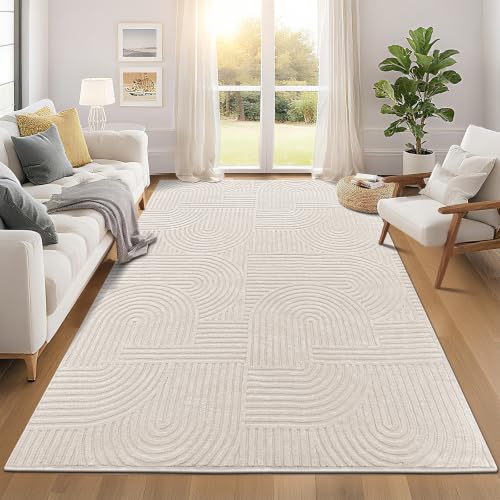
Soft Fluffy Rugs for Bedroom: With its plush high-low piles, this 6×9 area rugs delivers an incredibly comfortable and soft sensation, making it suitable for going barefoot. Lay the carpet over your hardwood floor, and it not only infuses warmth but also turns any room into a snuggle-worthy retreat

Soft Faux Cashmere for Everyday Comfort: Made with a 280GSM faux cashmere velvet surface, this 6'x9' area rug feels smooth and cozy under bare feet for daily routines, quiet lounging, family time, or pets resting nearby
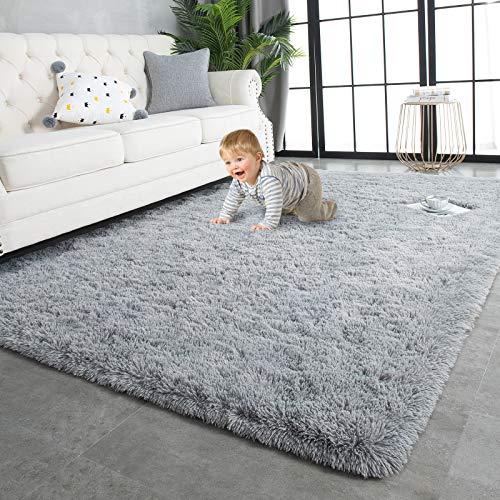
Premium material:Different comfort experience – Our fluffy soft rug is made of synthetic microfiber, which makes your bedroom rug is more comfy and soft. There are 4 practical sizes of the
6×9 Rug

A 6×9 rug sits right at the edge of what works under a queen bed, and in a standard-sized room that is exactly where it earns its keep. The mattress itself runs 60 by 80 inches, so a rug 72 inches wide leaves you roughly 24 inches of coverage on each side once the bed frame sits on top. That clears the 18-inch minimum that keeps your feet on wool instead of hardwood when you swing out of bed in the morning, though just barely.
The length is where the compromise shows. At 108 inches, a 6×9 rug will extend past the foot of the bed by about 28 inches, enough for a soft landing, but the bedside tables will sit entirely off the rug on most frames. I have seen this work best in rooms where the bed sits closer to one wall, or where the nightstands are narrow enough that their legs do not need the visual anchor of the rug edge running underneath them. For an Olympic queen, which measures 80 by 66 inches, that same 72-inch width actually fits the proportions more naturally, since the extra six inches of mattress width eats less of your side clearance.
The real limit here is the room itself. In anything much larger than 11 by 13 feet, a 6×9 rug starts to look like a bath mat that wandered into the wrong room. But for a medium bedroom where you want the warmth underfoot without the cost or bulk of an 8×10, this size keeps the floor from feeling bare while leaving enough visible hardwood around the edges to keep the space breathing.
Recommended Products

Soft Designed: This CHAMPLANT area rugs has a trendy faded style and a unique floral pattern, vintage tones blend perfectly with your home. This rug is made of high-quality faux wool fibers; Easy on the feet-soft as cotton balls; stain-resistant and non-shedding

Extra-long pile, ultra-soft: Our Shag Beige 2×4 Area Rug is made from 1.9-inch extra-long pile fibers. This material feels soft to the touch and features a high-density foam core that gently cushions your feet while enhancing softness, delivering an incredibly plush feel.

Ultra Soft & Non-slip: Featuring a shaggy carpet surface, the Ophanie soft area rug is highly soft with a high-density sponge interlayer. This rug effectively reduces shedding, and the non-slip bottom with small, durable anti-slip dots enhances friction to prevent sliding.
8×10 Rug

An 8×10 rug (96 by 120 inches) is the size most people actually buy for a queen bed, and for good reason. It gives full coverage under the bed plus enough overhang on the sides and foot to land your feet on something soft in the morning. The catch is the nightstands. They should sit just outside the rug’s edges rather than half on, half off; that half-on placement is the main reason 8×10 rugs get returned for bedroom use.
This size works best in rooms from 11 by 13 feet up to about 12 by 14 feet. In anything smaller, the floor showing around the rug drops below 20 inches and the room starts to feel swallowed. A tighter, more subdued pattern helps the smaller footprint read as calm rather than busy.
For renters working with a typical medium bedroom, the 8×10 is the practical default. It anchors the bed as a foundation, not an accent, and still leaves enough room in the budget for the pad underneath.
Recommended Products

【Ultra Soft Fluffy Rug】 This 8×10 grey shag rug features a 1.7-inch thick plush pile—dense, fluffy fibers that feel amazing underfoot, insulate against noise, and keep floors warmer in winter. A cozy soft rug for bedroom or living room.

Neutral Abstract Rug: This 8'×10' rug features a distressed abstract design in subtle tones, adding a modern, artistic touch to your space. It blends effortlessly with any home style, instantly enhancing your living room, bedroom, dining area, or office
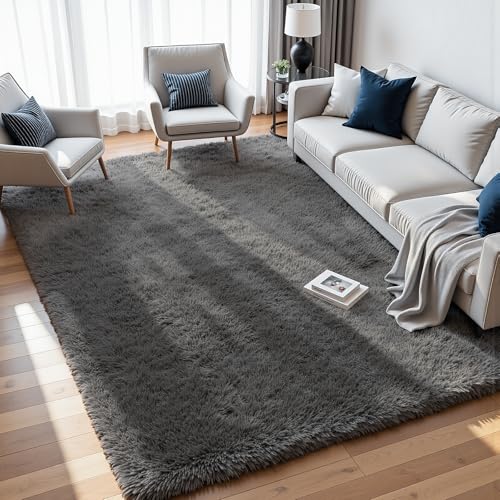
[Ultra Soft Fluffy Area Rugs for Living Room] 8×10 living room rug treat your feet to cloud-like comfort with our ultra-soft, high-density 1.7-inch plush microfiber pile—designed to stay fluffier longer without shedding. Whether walking, sitting, or lying down, each step feels luxuriously soft. Eco-friendly fibers resist matting, keeping the plush texture season after season. Ideal for bedroom, living room, or nursery.
9×12 Rug

A 9×12 rug is the size that makes a floor look finished instead of patched, provided the room can handle it. At 108 by 144 inches, it clears a queen mattress by roughly 24 inches on each side and about 30 inches at the foot, which means nightstands or a bench at the foot sit fully on the rug rather than straddling an edge. That continuity is what creates a grounded look; the bed, tables, and whatever sits beyond them read as one intentional layer instead of islands floating on bare floor.
The catch is square footage. In a room 12×14 feet or larger, a 9×12 has room to breathe and still leaves visible floor around the perimeter. Anything smaller and the rug starts eating the walls, which makes the space feel wrapped in textile rather than anchored by it. An 8×10 works as the fallback for tighter bedrooms, but it gets tight at the nightstands. If the rug edge cuts through furniture legs, the eye registers the interruption every time you walk in. For a primary bedroom over 140 square feet, size up to the 9×12 and let the whole sleeping area sit on one plane.
Recommended Products

Ultra Soft & Non-slip: Featuring a shaggy carpet surface, the Ophanie soft area rug is highly soft with a high-density sponge interlayer. This rug effectively reduces shedding, and the non-slip bottom with small, durable anti-slip dots enhances friction to prevent sliding.

CLOUD LIKE SOFTNESS & SUPREMELY COZY: Treat bare feet to absolute comfort. Crafted from premium faux wool, this living room rug delivers a luxuriously velvety soft texture that shields toes from cold floors. The tightly woven fibers to be non-shedding and durable, provides a relaxing environment.

【Modern Area Rug】This 6×9 ft blue abstract rug perfectly integrates minimalist elegance with an irregular pattern design, perfect for living room, bedroom, dining room and playroom
Runners
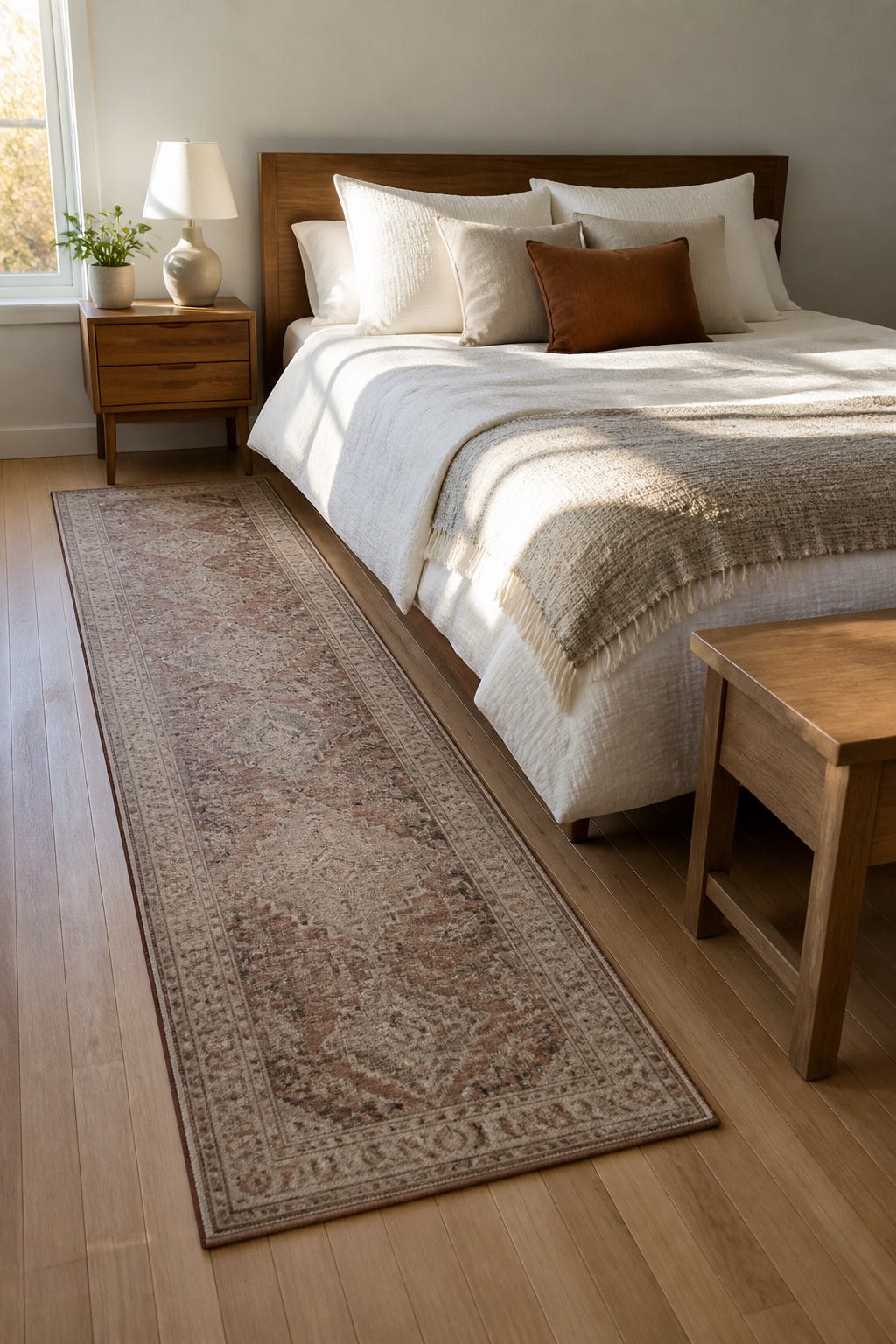
A 2.5-by-8-foot runner placed alongside the queen bed, not underneath it, solves the problem narrow bedrooms create for full area rugs. I first noticed this layout in a room barely ten feet across where a 9-by-12 would have wedged against the dresser and left no path to the closet. Two runners, one per side, give each sleeper a soft landing without eating the floor space the room needs to function.
The catch is cost per square foot. Covering both sides with separate pieces runs higher than one rug of equivalent total area, so this choice makes sense only where geometry forces the issue. Bedrooms under 120 square feet, or any queen setup with heavy furniture flanking two sides, are where the trade-off pays off. Symmetry matters here: mismatched widths or uneven placement reads as accidental, not intentional.
A single runner at the foot of the bed, perpendicular to the frame, is the budget fallback. It catches the first step out of bed but leaves the sides bare, which usually means adding a small mat or nightstand rug later anyway. I would skip this unless a full-size rug is genuinely out of reach this season.
Recommended Products

MACHINE WASHABLE: Our rug can be washed directly in washing machine in cold water and dried without heat. Daily maintenance is simple and convenient

【Classic Vintage Style】Hugear 5×7 area rug features a timeless distressed pattern that complements most home decor. Designed with classic retro styling, it blends well with modern and traditional interiors, adding elegant decorative charm to living spaces and high-traffic areas.

Ultra Soft & Non-slip: Featuring a shaggy carpet surface, the Ophanie soft area rug is highly soft with a high-density sponge interlayer. This rug effectively reduces shedding, and the non-slip bottom with small, durable anti-slip dots enhances friction to prevent sliding.
Rug Placement Rules
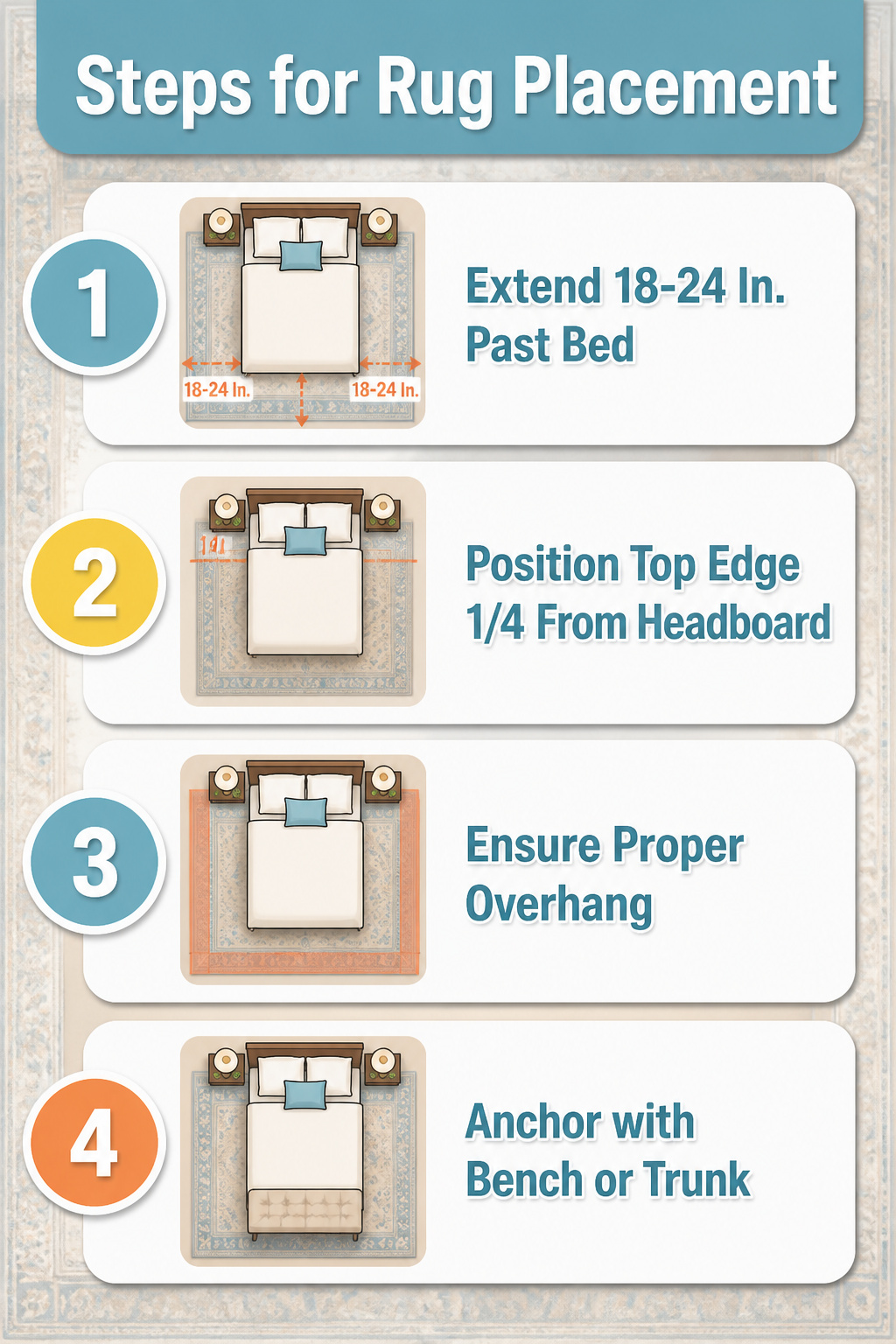
The rug needs to extend 18 to 24 inches past the sides and foot of your queen bed. Anything less, and the rug starts looking like a bath mat that wandered into the wrong room.
That overhang is what lets your feet hit something soft on cold mornings instead of bare floor. It also frames the bed so the whole setup reads as one intentional piece rather than a mattress floating on an island that’s too small for it.
An 8×10 rug is the size that usually delivers this for a queen. Positioned so the top edge sits about a quarter of the way from the headboard, you get that 18 to 24 inches showing on both sides and at the foot, plus enough runway past the foot to anchor a bench or trunk if you want one there later. Put all four legs on the rug and the reach can even tuck under your nightstands, which pulls the whole sleeping area together into a single zone.
The visual balance matters more than people expect. A bed is already the heaviest object in the room; the rug’s job is to echo that weight at floor level so nothing feels top-heavy. Skimp on the overhang and the eye notices the gap before it notices anything else.
Recommended Products

【Kid & Pet Friendly Washable Rug】Featuring skin-friendly fabric and tight weave, our vintage rug is long-lasting against pet scratching and daily wear from kids. The entryway rug works as a safe play surface for children and a comfy lounge area for pets, bringing warmth to your entire family
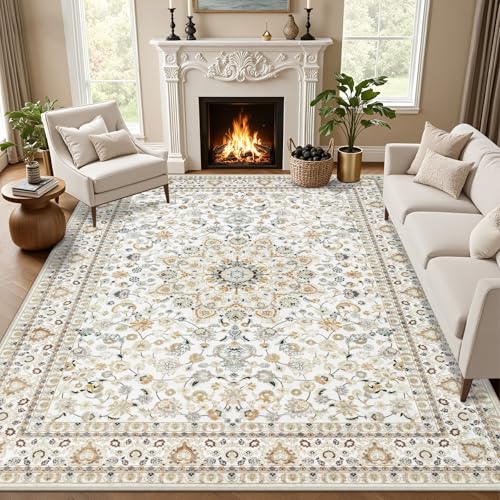
Timeless Classic Design Rug: Featuring an elaborate traditional pattern and harmonious color palette, these 6×9 area rugs bring artistic elegance to the interior. The versatile design works with various decor styles from vintage and bohemian to contemporary, making it suitable for living room, bedrooms, dining room, hallway, kids' playrooms, or home offices. Built to withstand daily use while maintaining its visual appeal, these rugs for living room 6×9 combines durability with timeless beauty

【Premium Material】Our vintage rug has a durable fiber, which is best for living room rugs, dining rooms, or any high-traffic areas. Moderate thickness, as an entrance rug, it will not block the entryway
Room Size and Nightstands
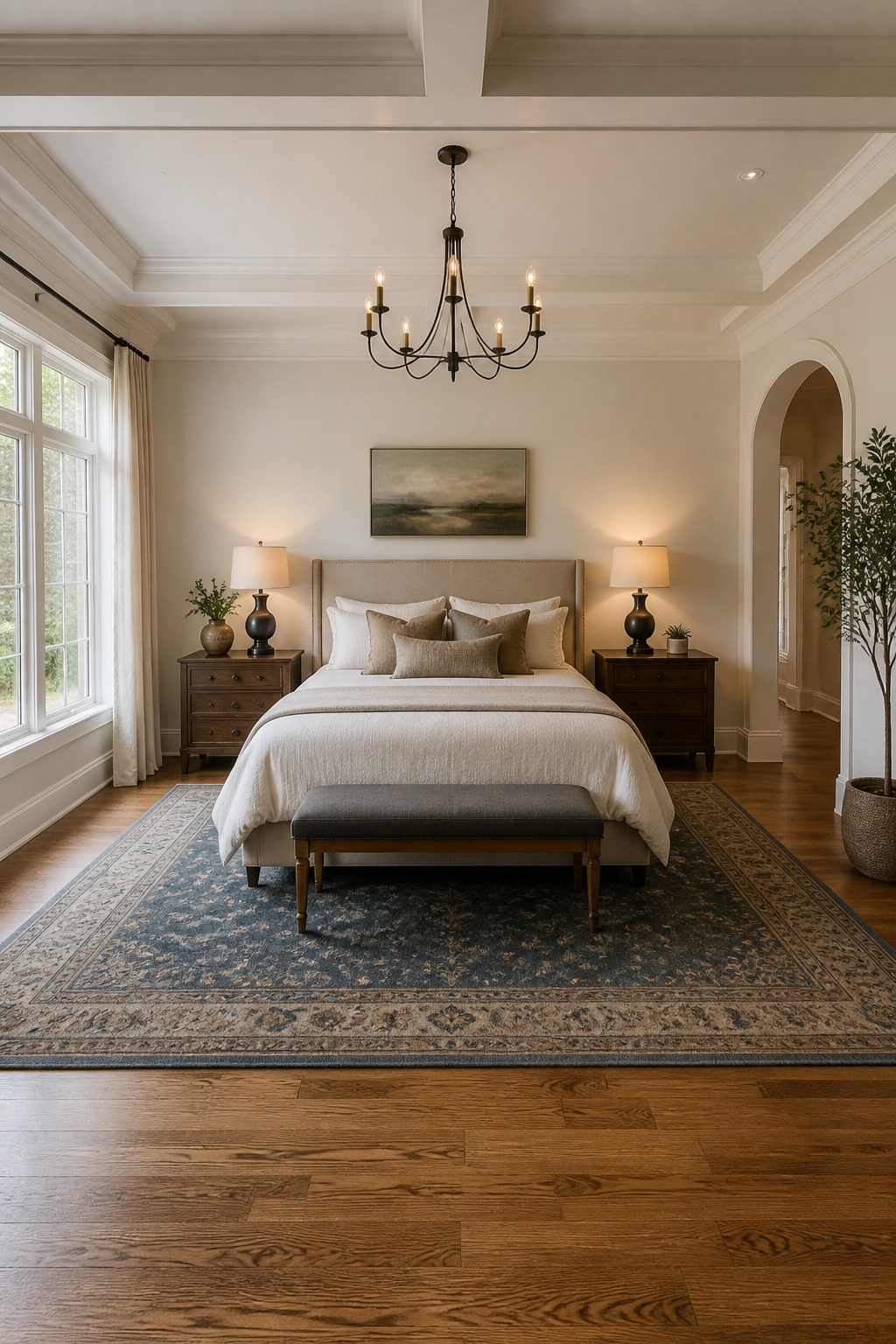
Bedroom dimensions decide whether you get the rug you want or the rug you can fit. In my last place, an 8×10 would have swallowed the floor whole, so I lived with a 5×8 that stopped short of the nightstands and never loved it. Nightstands sitting half on and half off a rug look like a mistake, not a choice; the cleaner move is either full coverage underneath or a rug that ends clean before them.
A 9×12 gives you that unified look in a large room, with the rug extending past the bed and both stands, plus the 18 inches of floor showing around the edges that keeps it from wall-hugging. Tighter rooms force the compromise: a 6×9 or even 5×8 tucked under the bed’s lower two-thirds, nightstands left on bare floor. The symmetry still works if you center the bed on the rug and let the stands mirror each other on either side.
Leave 8 to 18 inches of visible floor between rug and wall, tighter in small rooms, more breathing room in larger ones. Below 8 inches and the rug starts reading as wall-to-wall carpet that shrank in the wash.
Recommended Products

[ Ultra Soft & Skin-friendly ]: The ONASAR area rug is crafted from the plush fiber and upgraded backing, the fluffy area rug is incredibly soft to the touch and provides additional cozy and warmth to your home. They are great for barefoot walking and perfect for tummy time for babies. The rugs are kids and pet-friendly! We own the copyright to this geometric pattern.

Pet-friendly and slip-resistant surface: This area rug has a simple color and a luxurious feel. By using our pet-friendly and easy-to-clean carpet, you can enjoy a better time at home. This design adds a soft and luxurious element to your home, and is very suitable for use as a bedroom carpet, perfectly matching family life.

Extra-long pile, ultra-soft: Our Shag Beige 2×6 Area Rug is made from 1.9-inch extra-long pile fibers. This material feels soft to the touch and features a high-density foam core that gently cushions your feet while enhancing softness, delivering an incredibly plush feel.
Layering and Small-Space Fixes
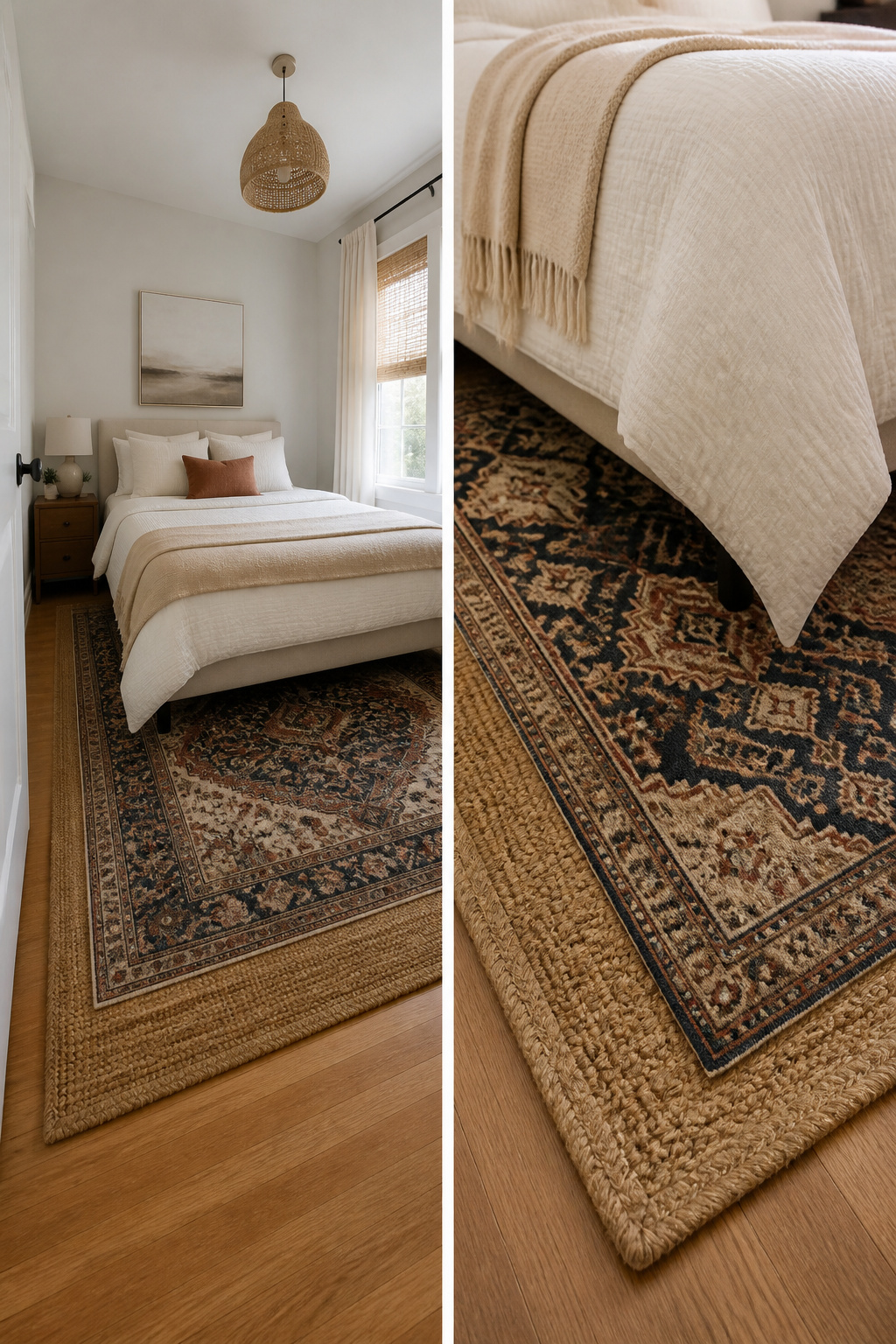
Layering two smaller rugs under a queen bed takes up more floor space than a single 9×12, which sounds backward until you need it. In my first apartment, the bedroom was barely ten feet wide; a standard area rug would have swallowed the walking path entirely. Two 4×6 rugs, placed side by side with the seam running down the center, gave me soft landing spots on both sides while leaving the edges of the room bare and navigable.
For renters working with what they already own, a 5×7 or 5×8 rug you love and want to keep can sit at the foot of the bed as a morning stretch zone, paired with runners along the sides. This avoids the floating-rug problem where a too-small piece sits awkwardly under the middle of the bed looking accidental.
In narrow rooms, side runners replace a full area rug entirely. Start them about halfway to two-thirds under the bed and extend at least eighteen inches past the side so your feet land on pile, not floorboard, when you swing out. The texture still reads as intentional, and you keep the visual breathing room that makes a tight space feel held together rather than cluttered.
Frequently Asked Questions
What size rug goes under a queen bed?
The most commonly recommended sizes are 8×10 and 9×12 feet. A queen mattress measures 60 by 80 inches, so the rug needs to extend past those dimensions to avoid looking undersized. An 8×10 works in most standard bedrooms, while a 9×12 fits larger primary bedrooms with enough floor space around the edges.
Is 8×10 too big under a queen bed?
No, 8×10 is not too big; it is the size most people actually buy for a queen bed. It gives full coverage under the bed plus enough overhang on the sides and foot for a soft landing in the morning. The main caution is keeping nightstands just outside the rug rather than half on, half off.
Can I use a 5×7 rug under a queen bed?
Yes, but it is the absolute minimum and only works when floor space is genuinely tight. You get roughly 18 inches of rug showing on each side of the mattress, enough to catch your feet but not enough to frame the bed with breathing room. Nightstands will sit on bare floor, so this size works best with the bed pushed against a wall.
Should nightstands sit on the rug?
Yes, for a unified, grounded look nightstands should ideally sit fully on the rug. That continuity is what pulls the sleeping area together into one intentional layer instead of islands floating on bare floor. A 9×12 rug achieves this easily; an 8×10 gets tight at the edges and may leave nightstands straddling the rug line.
What are the main rug placement styles for a queen bed?
The three approaches are: all furniture on the rug, which a 9×12 typically provides; only the bed on the rug with nightstands off, common with 8×10 rugs; or no furniture on the rug, which happens with smaller sizes like 5×7 or 5×8. The 18 to 24 inches of overhang past the bed frame is the rule that separates a foundation look from a bath mat effect.
Leave a Reply