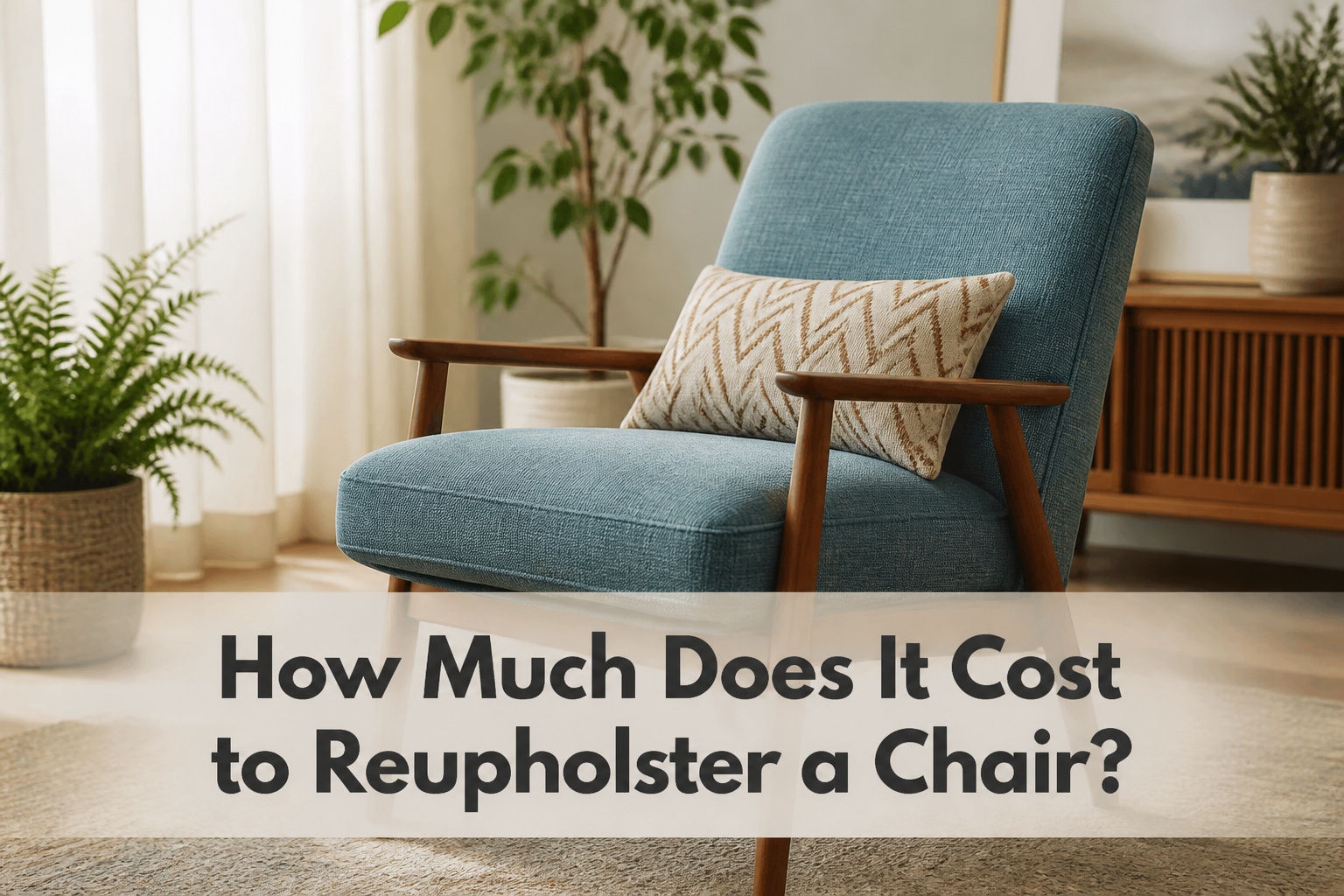
Reupholstering a chair costs anywhere from $50 to $2,000, with $750 landing right around the middle for most homeowners. That spread exists because five things push the number up or down: chair type, fabric choice, local labor rates, structural repairs, and finishing details like tufting or cording.
How Much Does It Cost to Reupholster a Chair
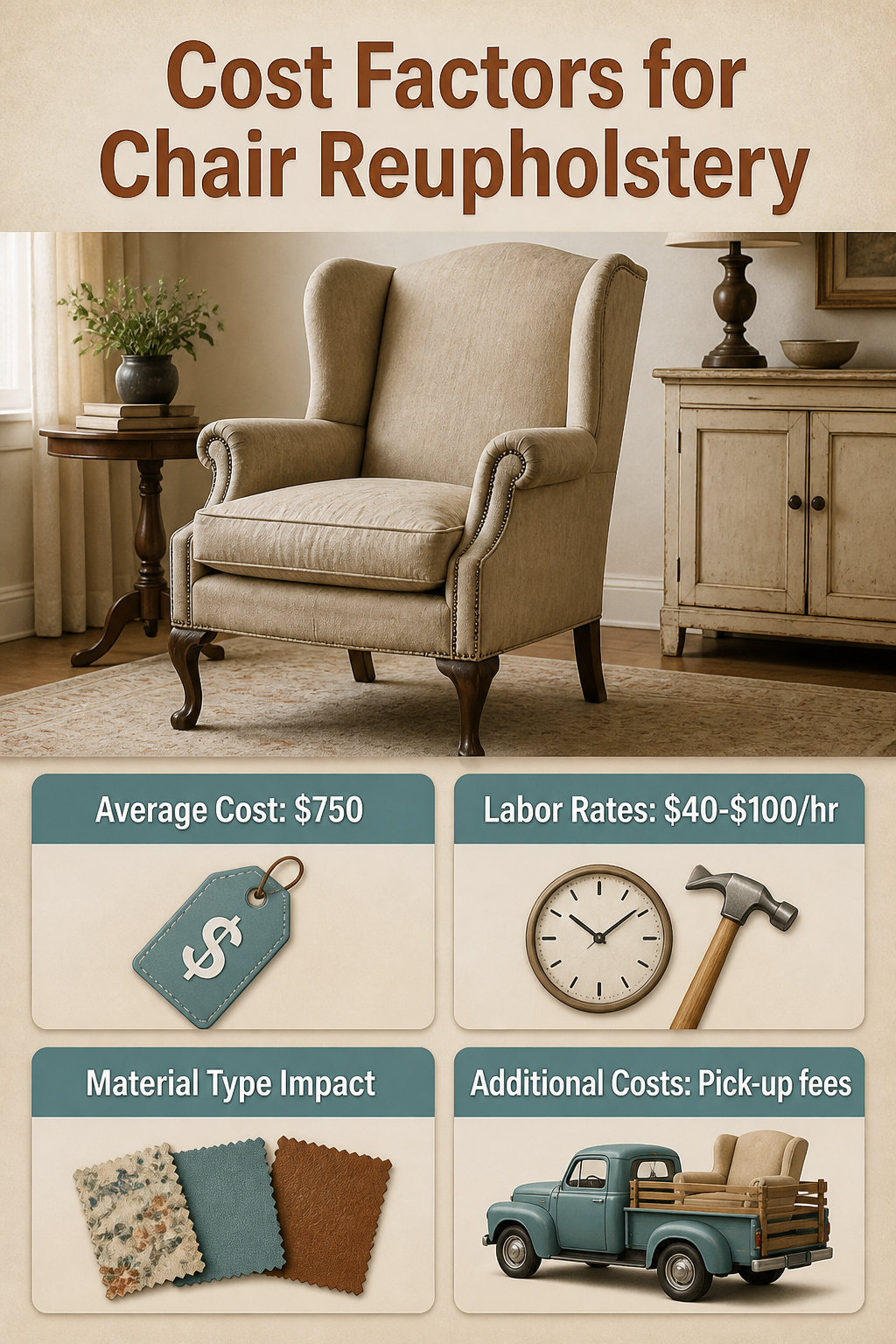
The average cost to reupholster a chair runs from $50 to $2,000, with most homeowners spending around $750. That wide spread exists because five things push the number up or down.
Chair type matters first. A simple dining chair takes far less labor than a wingback or recliner, and leather work costs more than fabric on any frame. Fabric choice is the second lever, patterned materials running labor up by 10% to 20% since the upholsterer has to match repeats across seams. Local labor rates fill out the bill at $40 to $100 per hour, and that is before extras, frame repairs start at $250, and details like tufting or cording add another 20% to 30%. Some shops also charge to pick up and deliver, so transportation fees can slip into the total if you are not hauling the piece yourself.
Recommended Products

【Measure Before Buying】Lufyzora's dining chair seat covers waterproof are made of flexible leather fabric. The optimal size range for dining chair seat covers leather is:…
Dining Chair, Seat Only
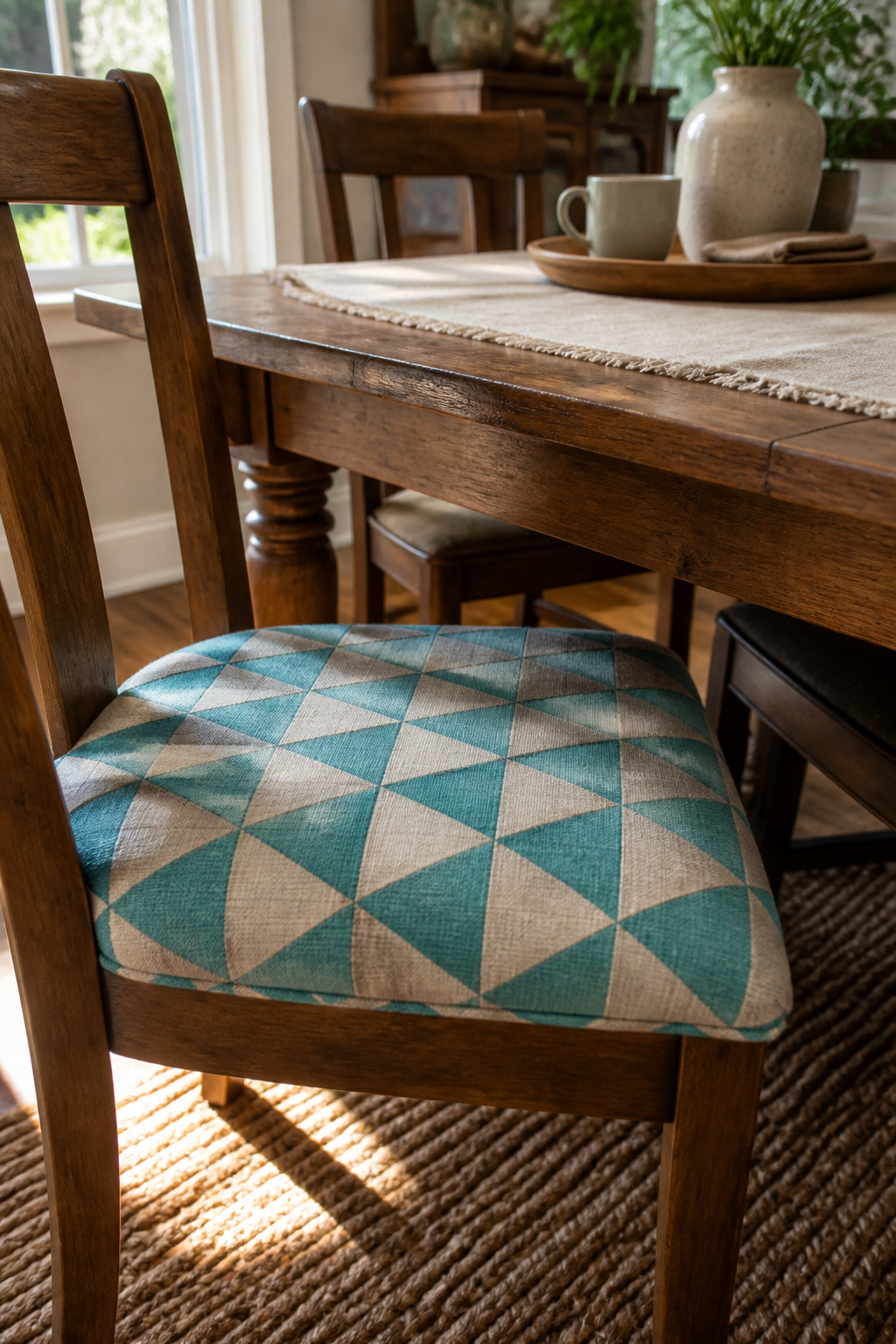
A dining chair seat is the place most people start with reupholstery, and the price reflects that simplicity. $60 to $150 covers a basic recovered seat, which usually needs only half a yard of fabric and a straightforward plywood base with foam on top. There is no complex framing to rebuild, no back panel to align, and often no piping or trim to wrestle around curves.
That minimal labor is why this project works as a first attempt or a quick weekend fix. The seat pops off with a few screws, the old fabric and staples come up, and the new piece gets stretched and tacked in place. A chair with an upholstered back immediately jumps to a higher bracket, $150 to $350, because the geometry changes: pattern matching across seams, tighter corners, and more time under the machine. But the seat alone stays predictable, which matters when you are pricing six matching chairs and multiplying by Saturday afternoon.
Recommended Products


Dining Chair, Fully Upholstered
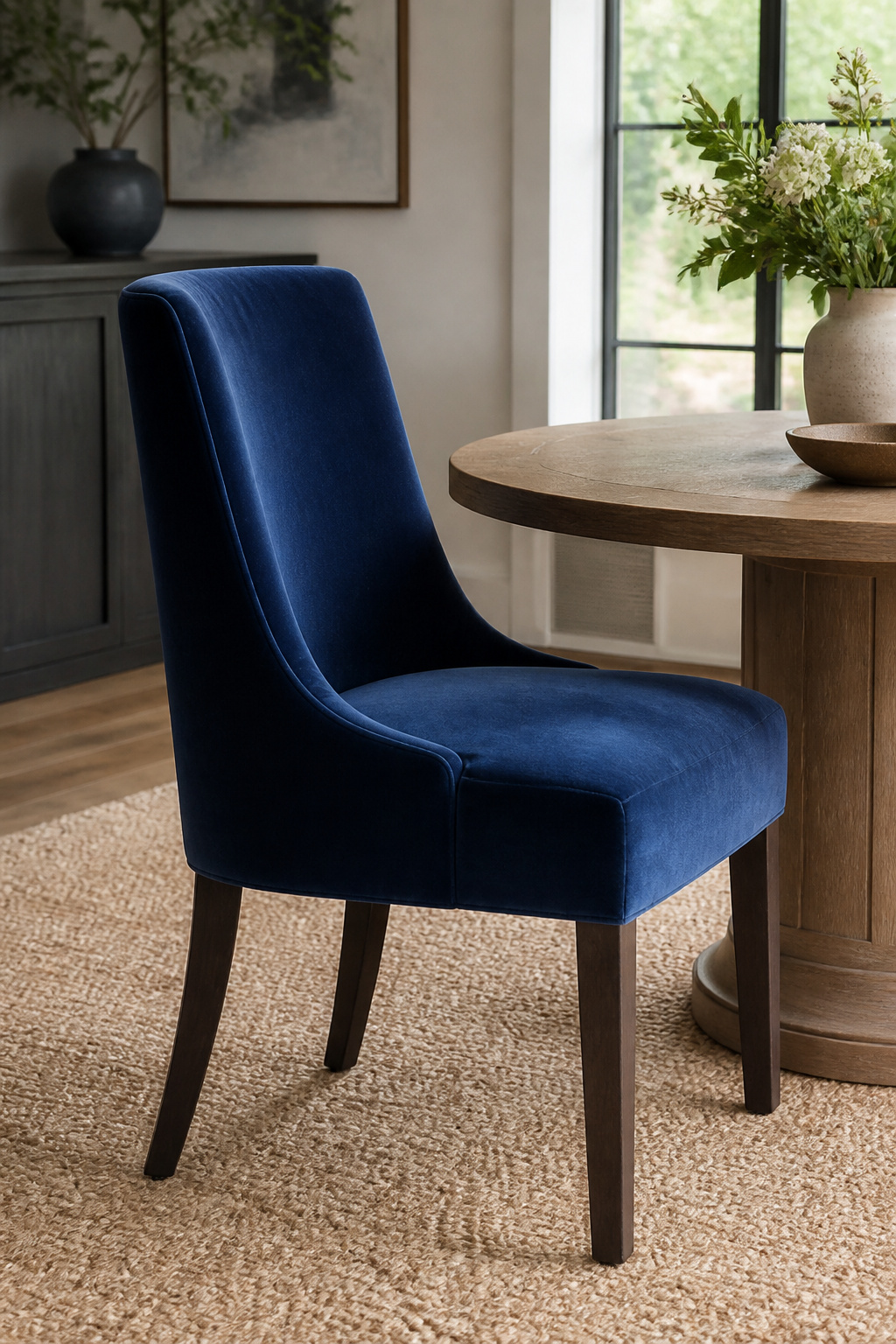
A fully upholstered dining chair, back and sides included, runs $150 to $350 per seat. The jump from a simple seat-only recover comes down to yardage and labor, both of which multiply fast once fabric has to wrap rails, tuck into corners, and stay smooth across compound curves.
The sources put a bare seat at $50–$150 and half a yard of fabric. Add the back and the math changes: you’re now looking at two to four yards depending on the frame width and whether the pattern needs matching at the seams. Labor climbs too, because attaching fabric around vertical rails means hand-work at angles a flat seat never asks for. Parsons chairs, with their clean padded backs, illustrate the spread well, running $150–$500 depending on how tricky the corners prove and whether decorative trim needs replacing.
Pattern alignment is where I, reading through the estimates, would watch the quote. A large-scale print on a fully upholstered chair burns extra yardage fast, and some shops charge per seam for matching. If your chairs have nailhead trim or the foam beneath has compressed, both add line items that push the total toward the upper bound.
Recommended Products


Made in America: All our products are proudly made in the USA!

HIGH QUALITY – Foamy Foam High Density Upholstery Foam is the best option for Seat Cushion Replacement, Couch Cushion Replacement, Bench Cushion Replacement, and variety of other upholstery projects.
Armchair
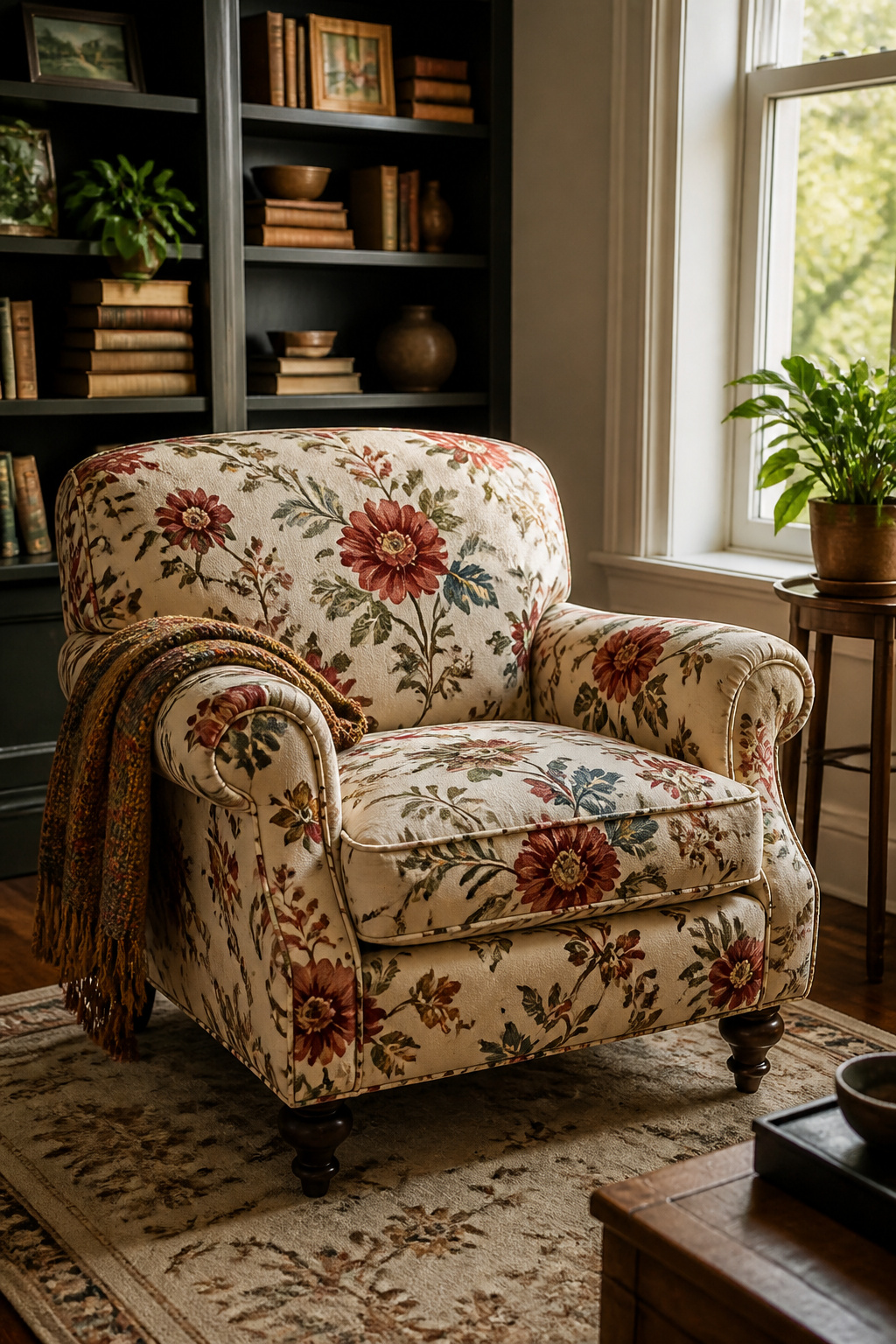
An armchair runs $300 to $1,500 to reupholster, and most of that spread comes down to three things you can spot in five seconds. Size matters first: the larger the chair, the more yardage it eats, typically 3 to 5 yards depending on the frame. Then check the arms. Padded roll arms or pillow tops need extra fabric and labor to shape and seam, while show-wood arms skip that step entirely. The seam count at those arms is the hidden cost driver. Multiple panels meeting at a corner mean more cutting, more matching, and more time at the workbench. I noticed the estimates cluster tighter around $800 to $1,500 once you add thick padding and curved shapes, which push the job past the simpler, smaller end of the range. If your armchair is compact with clean lines and exposed wood, you’re likelier to land near that $300 floor.
Recommended Products

What You Will Get – 1 Bundle antique white twisted lip cord trim ribbon(13.7 Yards), and the utmost-caring packaging.

Reliable and Heavy-duty: YaeCCC chair webbing is made from heavy-duty jute fibers, ensuring long-lasting strength and durability. This makes it perfect for chair repair, upholstery, and other projects that require a reliable and sturdy material.

Size: about 0.6Cm/0.24 in diameter; about 13 yards/roll, weight 0.35Kg, Perfect for Christmas homemade craft. SUPERIOR ROPE – Durable. Long-Lasting. Designed for DIY crafts made with Rope.
Wingback Chair
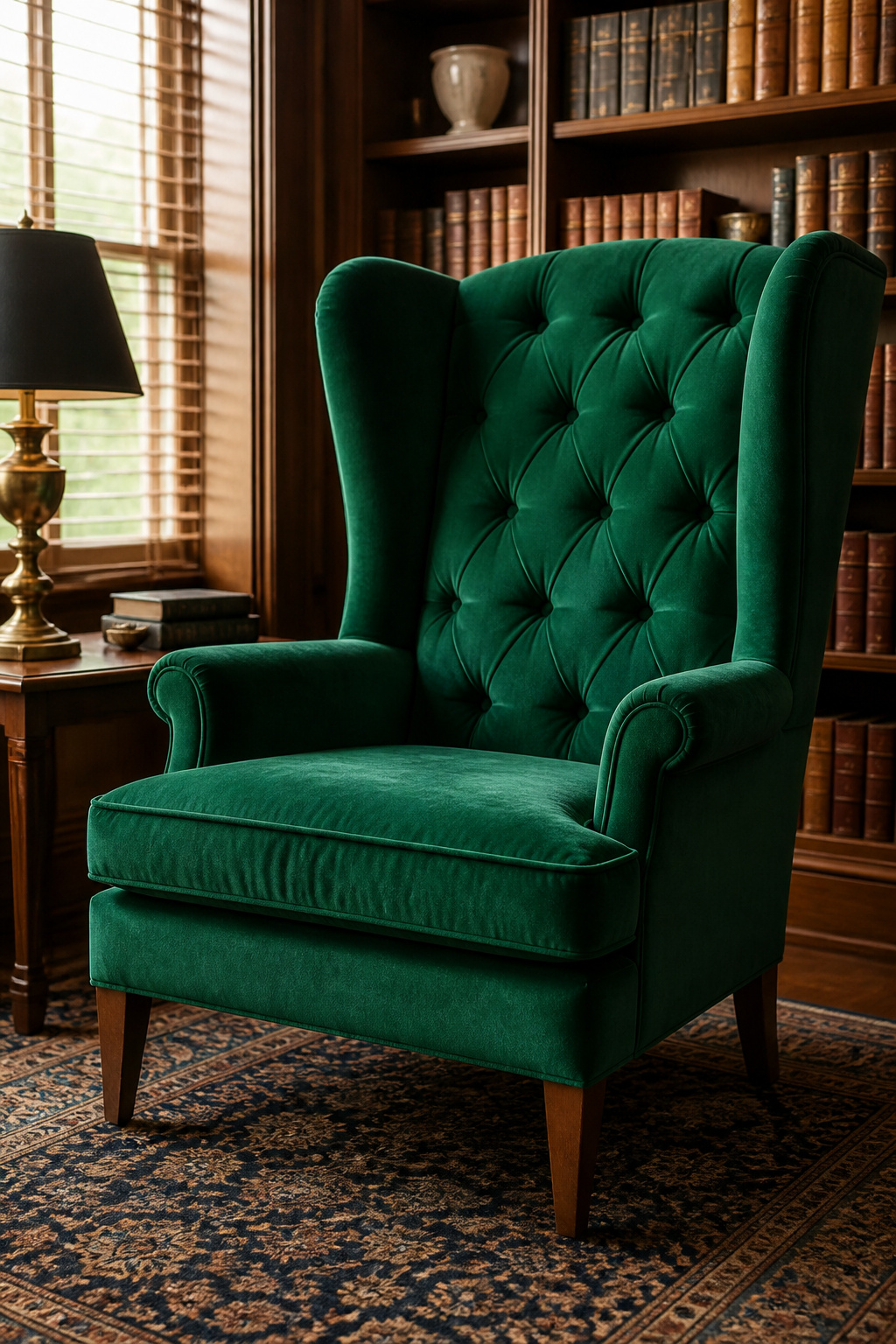
A wingback chair runs $500 to $1,750 to reupholster, and the wings themselves are mostly why. That tall back and the two side panels mean more cutting, more fitting, and more seams to hide. Add tufting, a skirt, or cushions and the hours stack up fast.
Pattern matching hits hardest on the wings. A stripe or plaid that lines up across the back and then continues onto each wing eats extra yardage, sometimes two to four yards more than a solid fabric would need. One upholsterer I read about planned the layout for an hour before touching shears.
Wingback chairs cost approximately $1,000 to $2,000 to reupholster. These chairs are usually on the larger side, and they need between 6 and 8 yards of fabric to recover them.
— Bob Vila
That upper range lands where tufting, age, or thick padding enter the picture. If your chair is antique, expect 25% to 50% more for the extra care.
Recommended Products

Material:This faux leather is made by Polyurethane,picture shows natural wooden skin textured and the backside which is cotton back!Thickness is approx 0.035-0.04 inch,it's easy to work with;weight is approx 2 lbs per linear yard,it's durable and breathable and comfortable.

NEW LEATHER LOOK: The new material is made of high quality polyester and spandex, and the recliner chair cover has the texture of leather and looks like leather, but it is more breathable, soft and stretchy than traditional leather fabric.

Material:This faux leather is made by Polyurethane,picture shows natural wooden skin textured and the backside which is cotton back!Thickness is approx 0.035-0.04 inch,it's easy to work with;weight is approx 2 lbs per linear yard,it's durable and breathable and comfortable.
Recliner
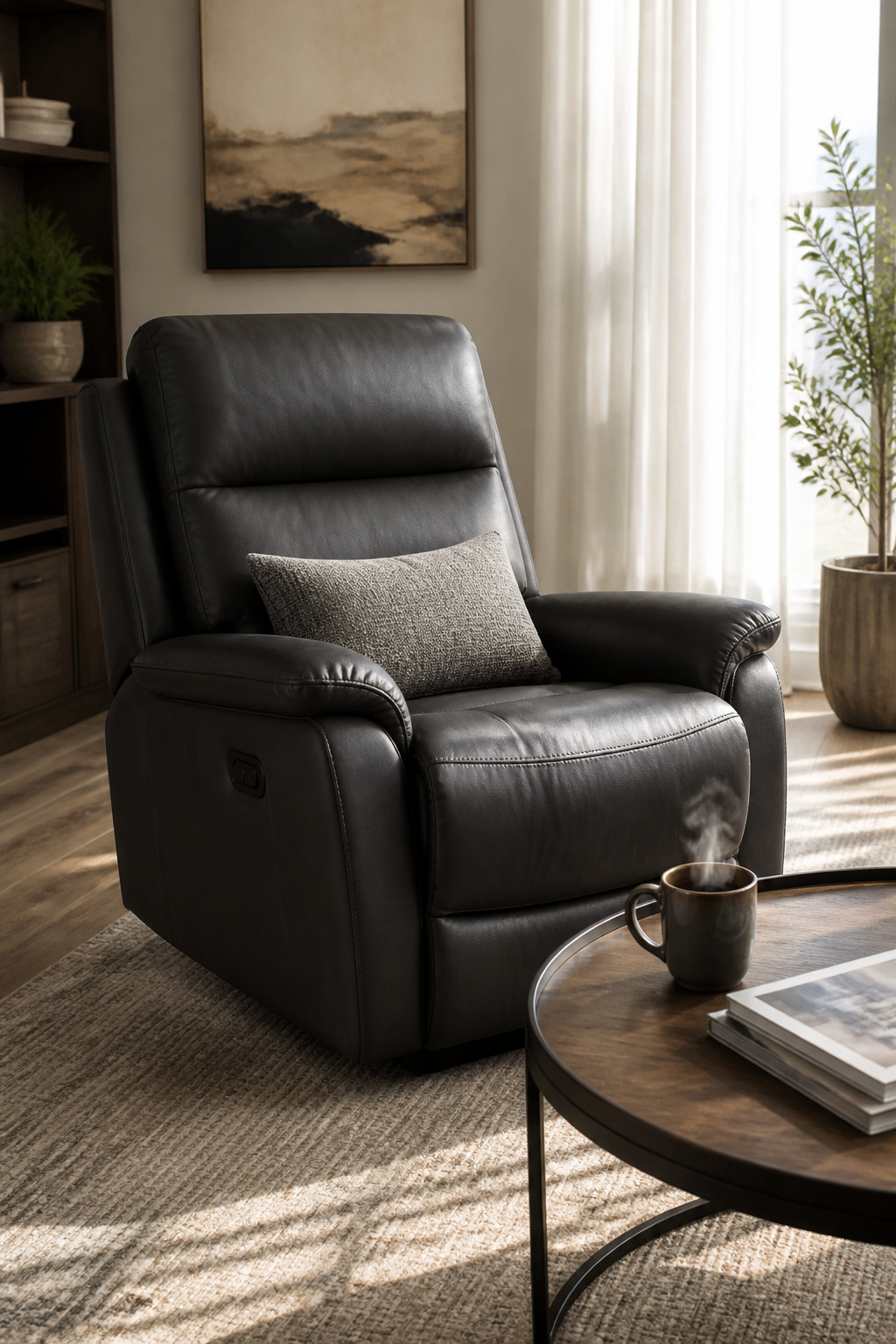
A recliner runs $400 to $1,500 to reupholster, and the labor is where that spread comes from. The mechanism underneath changes everything: the upholsterer has to work around pivoting hardware, and any fabric near moving joints has to be cut and secured so it does not bind or wear through. The footrest is its own piece, often needing separate yardage and padding, and the back cushion is usually attached rather than loose, so removing it means marking every attachment point exactly or the recline geometry goes wrong on reassembly.
Six to ten yards of fabric is the typical range, which is more than most armchairs need. The padding gets replaced in layers too, because the original compresses unevenly where the body weight falls and the footrest hinges. I have watched enough of these come back from shops to know that the ones with smoother action afterward were the ones where the upholsterer had clearance to strip the frame down to the mechanism first. If the shop has to work around attached sides or skirt panels, the labor hours stack up fast.
For a renter or someone planning to move in a few years, that cost sits close to replacement territory. A new mid-range recliner can be had for the lower end of that same band, though it will not carry the frame or mechanism quality of an older piece. The math changes if the chair was inherited or if the mechanism itself is still solid, which is worth testing before you commit either way.
Recommended Products

Nordic style faux cotton and hemp fabric, Slub knot pattern weaving, Simple lines allow you to easily enjoy the rhythm of life!

【Premium Material】High quality products means every detail is of high standard. Made of high quality faux pu leather, SearchI chair seat covers have premium properties of High stretch, good glossiness and ultra durability. Upgraded drawstrings are durable and not easy to break or fall apart. Processed with unique dyeing technics, the chair covers features good color fastness and will not fade easily.

Nordic style faux cotton and hemp fabric, Slub knot pattern weaving, Simple lines allow you to easily enjoy the rhythm of life!
Tub Chair
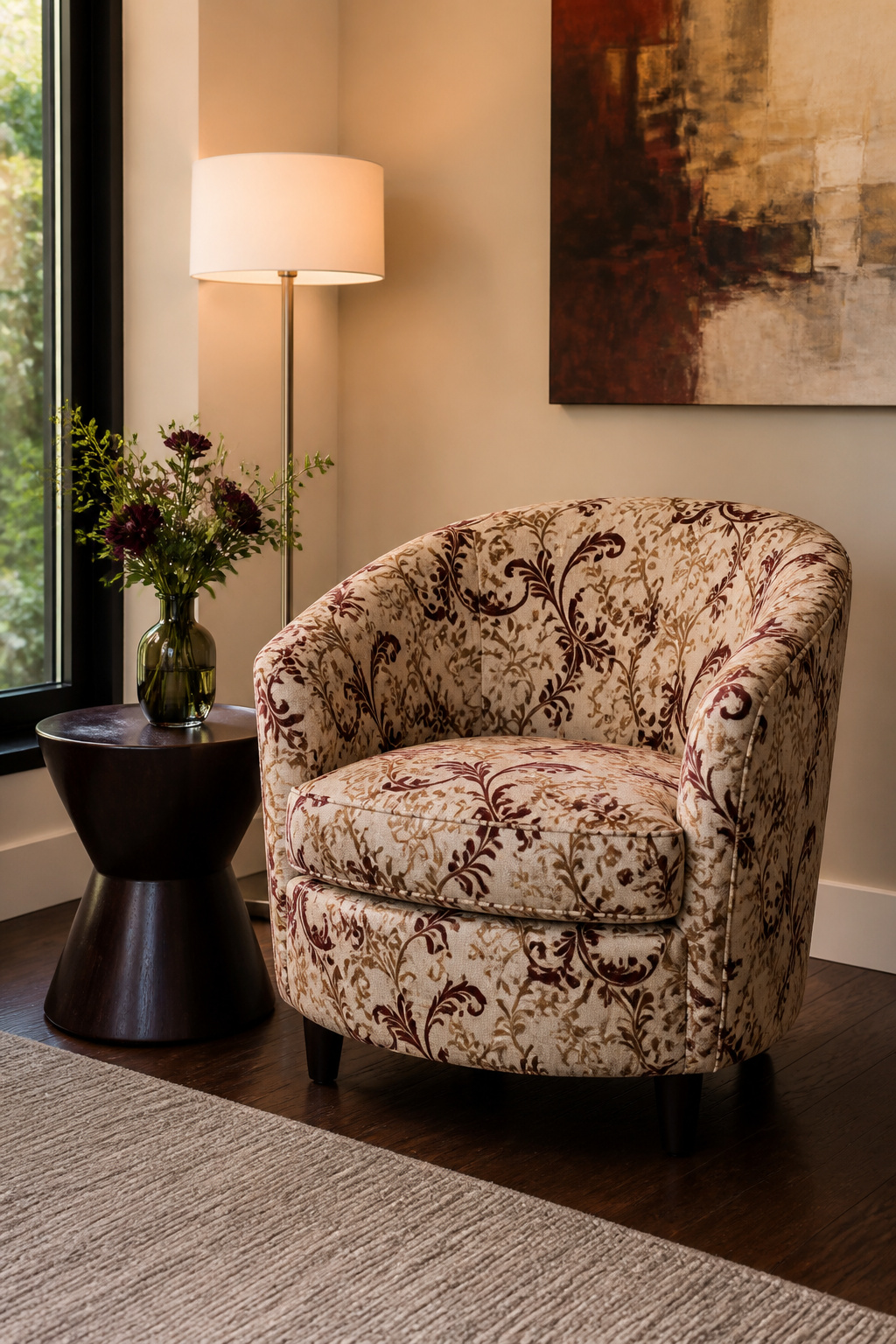
A tub chair, the kind with a barrel back that curves uninterrupted around to form the arms, burns fabric fast. That single continuous panel demands the pattern flow without a break, so the upholsterer often cuts on the bias to let the material stretch around the curve. Stripes or florals make it worse: the repeat has to match where the back meets the seat, and the alignment eats yardage that would cover a simpler chair twice over. Expect 2 to 4 yards even for a small tub chair, and toward the higher end if the print is large or directional like velvet or corduroy. The waste is real; I have watched enough estimates come back to know the yardage quoted for these chairs surprises people who are used to flat-backed dining seats. Reupholstering a tub chair runs $400 to $800, and the fabric bill is where that starts, not where it ends. A solid, non-directional cloth saves money twice: less material, less labor tracing and matching.
Recommended Products


𝐇𝐈𝐆𝐇-𝐐𝐔𝐀𝐋𝐈𝐓𝐘 𝐂𝐇𝐄𝐍𝐈𝐋𝐋𝐄: Experience luxurious comfort with our high-performance chenille fabric for upholstery that combines durability with soft texture—perfect for both commercial and home interiors

Material Dimensions: 1/2 yard – 18 x 54 inches.
Leather Chair
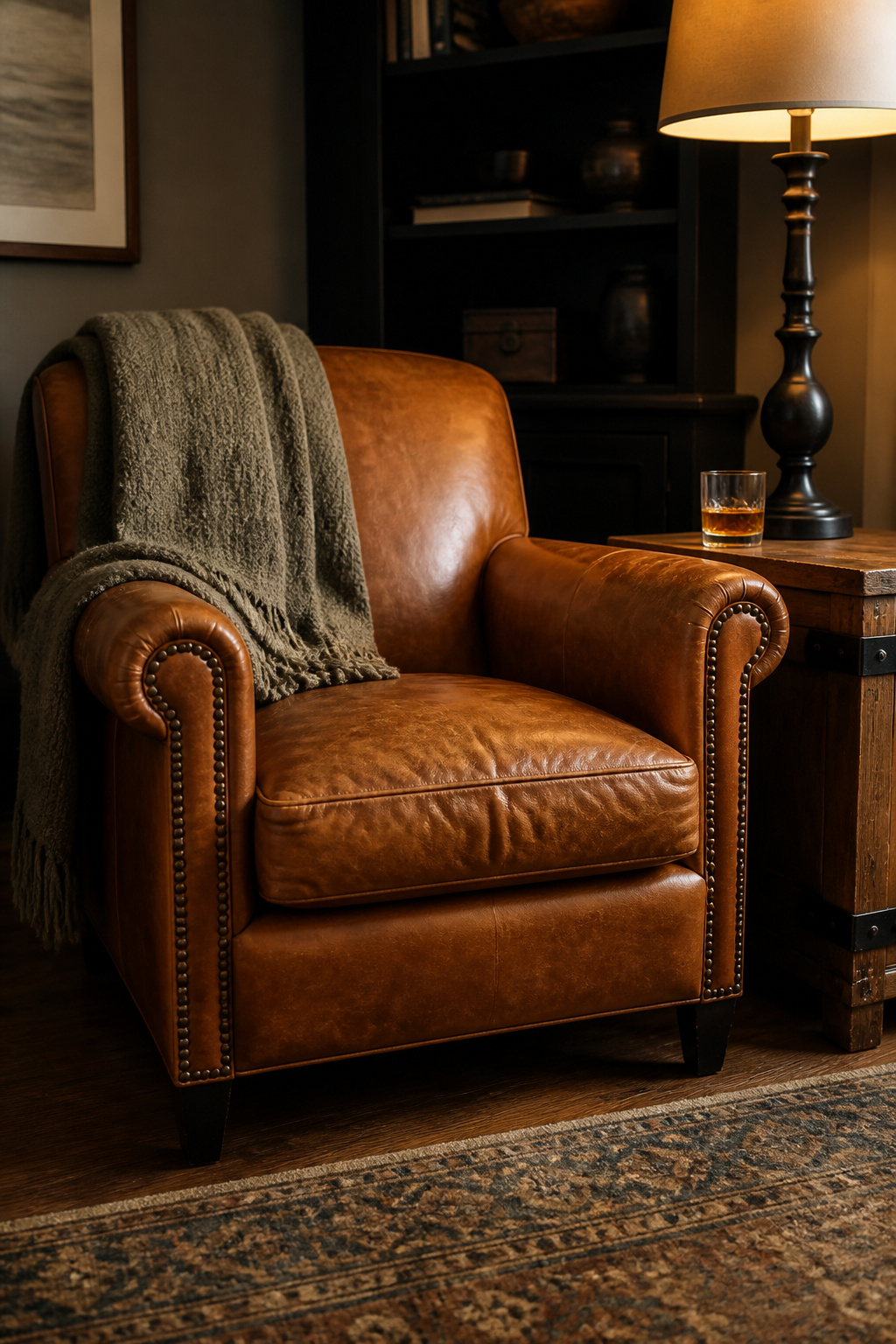
Leather upholstery runs across almost every chair form, from a dining seat to a club chair, and the material itself drives the math more than the shape underneath. Hides are sold by the hide, not by the yard, which means you buy the whole skin and work with what you have. A single chair might need only part of one hide, but matching grain and color across multiple pieces, or finding a hide large enough for a wide seat without a seam, burns through extra material fast. The waste adds up invisibly. I have watched prices climb simply because the upholsterer needed two hides to get consistent texture across arms and back, throwing away the odd-shaped remainder from each. If you are upholstering one chair, ask whether the shop already has a matching hide in inventory from a previous job. Starting fresh with a full hide for a single seat is where the cost breaks from standard fabric work and keeps climbing.
Recommended Products

Package Include: you will receive 6 white high density foam cushions replacements, measuring about 2 x 22 x 22 inches, which are suitable for most seats; The product has a density of 2.2; It is a 50 ILD high-density foam; There are sufficient quantity for your daily use and replacement needs

Available In Multiple Thicknesses:Choose the thickness that best suits your project needs. Thinner foam works well for light cushioning and upholstery applications, while thicker foam provides additional comfort and support for seating projects.

Office Chair
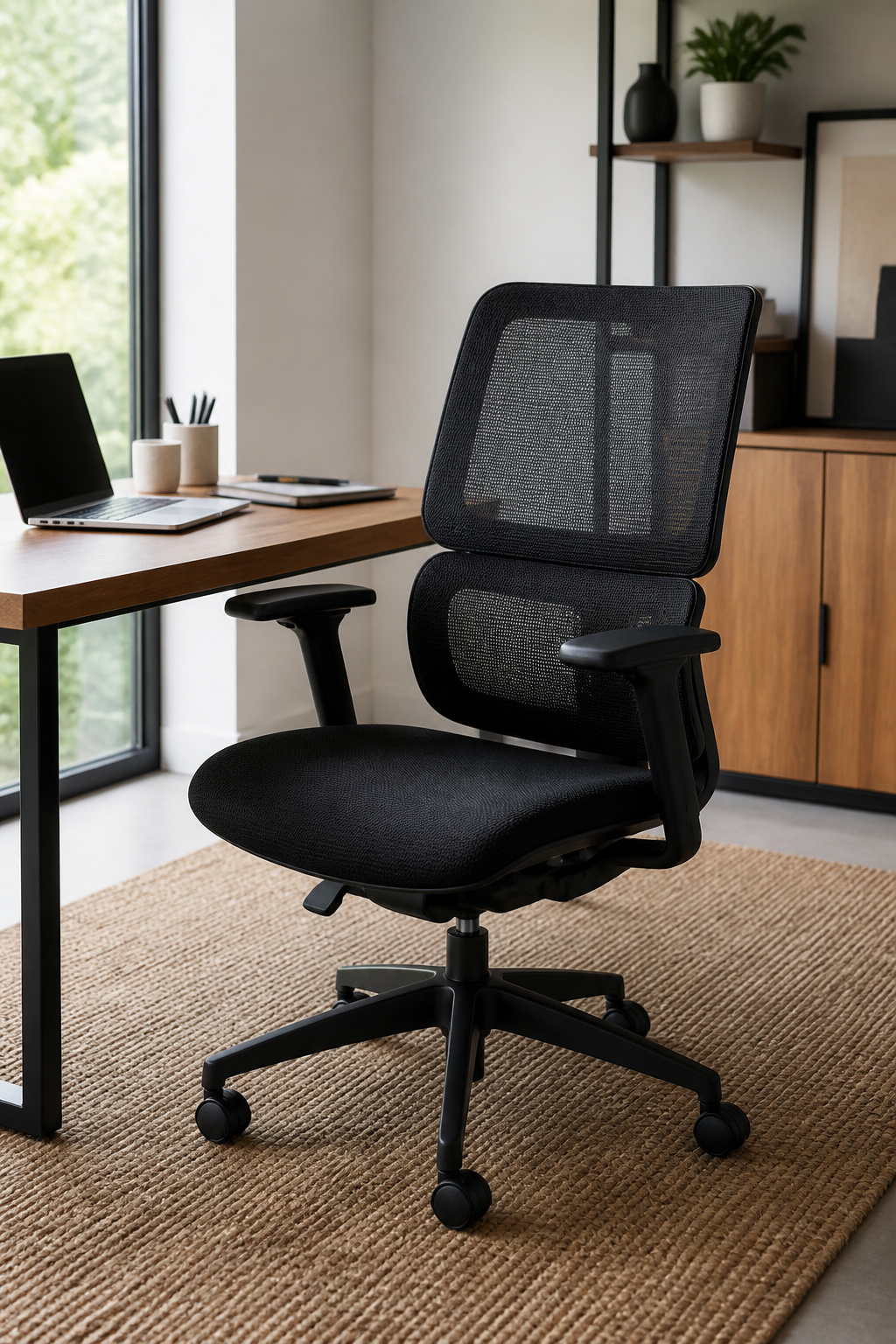
Office chairs run $200 to $700 to reupholster, which puts them in the same band as a bergère but for almost opposite reasons. The bergère is simple wood and fabric; the office chair is plastic shells, metal frames, and three separate padded pieces that never come apart the way you’d hope.
The seat pan, back shell, and arm pads each need their own cuts and attachment method. Plastic frames hide the screw heads, so a shop often has to break tabs or drill rivets just to reach the foam underneath. Metal frames are easier to open but harder to staple into; the fabric gets clipped or screwed to sub-plates instead. Either way, the labor isn’t in the sewing, it’s in the disassembly and re-assembly.
A basic task chair with only a padded seat sits at the low end of that range. Add a heavily padded back, adjustable arms, and the headrest nobody uses, and the yardage climbs fast. The fabric itself is only $15 to $100-plus per yard, but an office chair wastes more of it in small, angled pieces than a dining chair ever would.
If the chair cost $180 new, the math gets awkward fast. A $400 reupholstery job on a five-year-old Herman Miller makes sense; on a Staples special from 2019, it rarely does.
Recommended Products

Material : Made of high quality polyester, smooth and durable.


5/32" Twin Fiber Welt Cord: Two welt cords braided together for double welt (double piping) applications.
Footstool
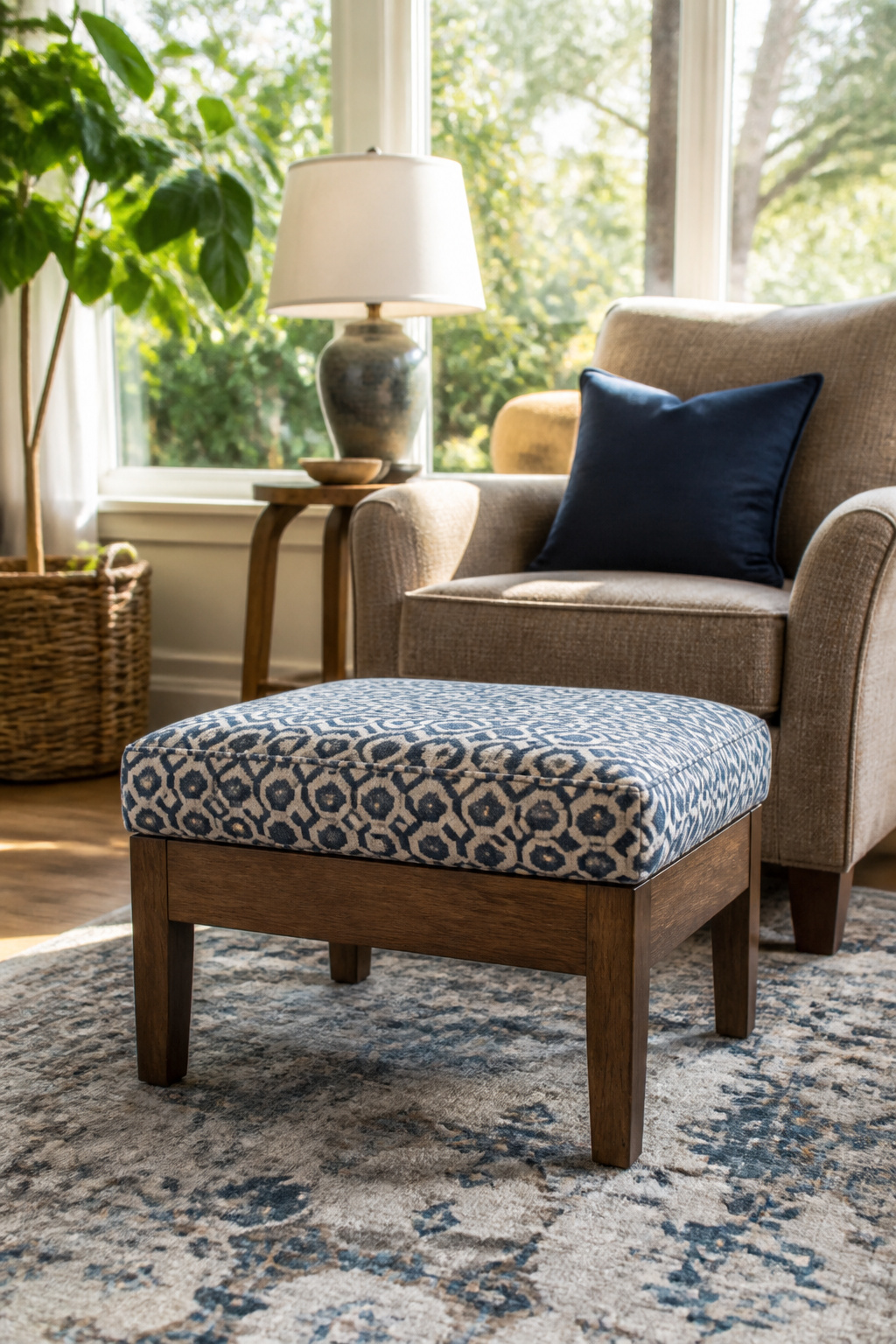
A footstool or ottoman is usually the gentlest entry point into reupholstery: a padded box with four sides and a top, nothing hinged, nothing tufted. If the lid lifts for storage, the hinge hardware and the extra fabric to hide the seam add one more step and a little more labor, but the frame itself still tends to stay sound. I have seen plenty of these done as companions to a chair that is getting the same treatment, and matching them makes sense when the original fabric has faded or worn in a way that no bolt from the store will match exactly. The small scale also means a mistake costs less in yardage, though the compact corners can be unforgiving if you pull too tight and distort the shape. Most are simple enough that a first-timer finishes in an afternoon, and the result sits right there in the living room where guests will actually use it.
Recommended Products

Material:This faux leather is made by Polyurethane,picture shows natural wooden skin textured and the backside which is cotton back!Thickness is approx 0.035-0.04 inch,it's easy to work with;weight is approx 2 lbs per linear yard,it's durable and breathable and comfortable.

Material:This faux leather is made by Polyurethane,picture shows natural wooden skin textured and the backside which is cotton back!Thickness is approx 0.035-0.04 inch,it's easy to work with;weight is approx 2 lbs per linear yard,it's durable and breathable and comfortable.

Overall Dimensions: Kindly please confirm the size before buying. Measure 37"W x 37"D x 41"H, Expanded Length – 65", Seat Dimensions – 22"W x 20"D, Seat Height – 19", Weight Capacity – 350 lbs.
Bergère Chair
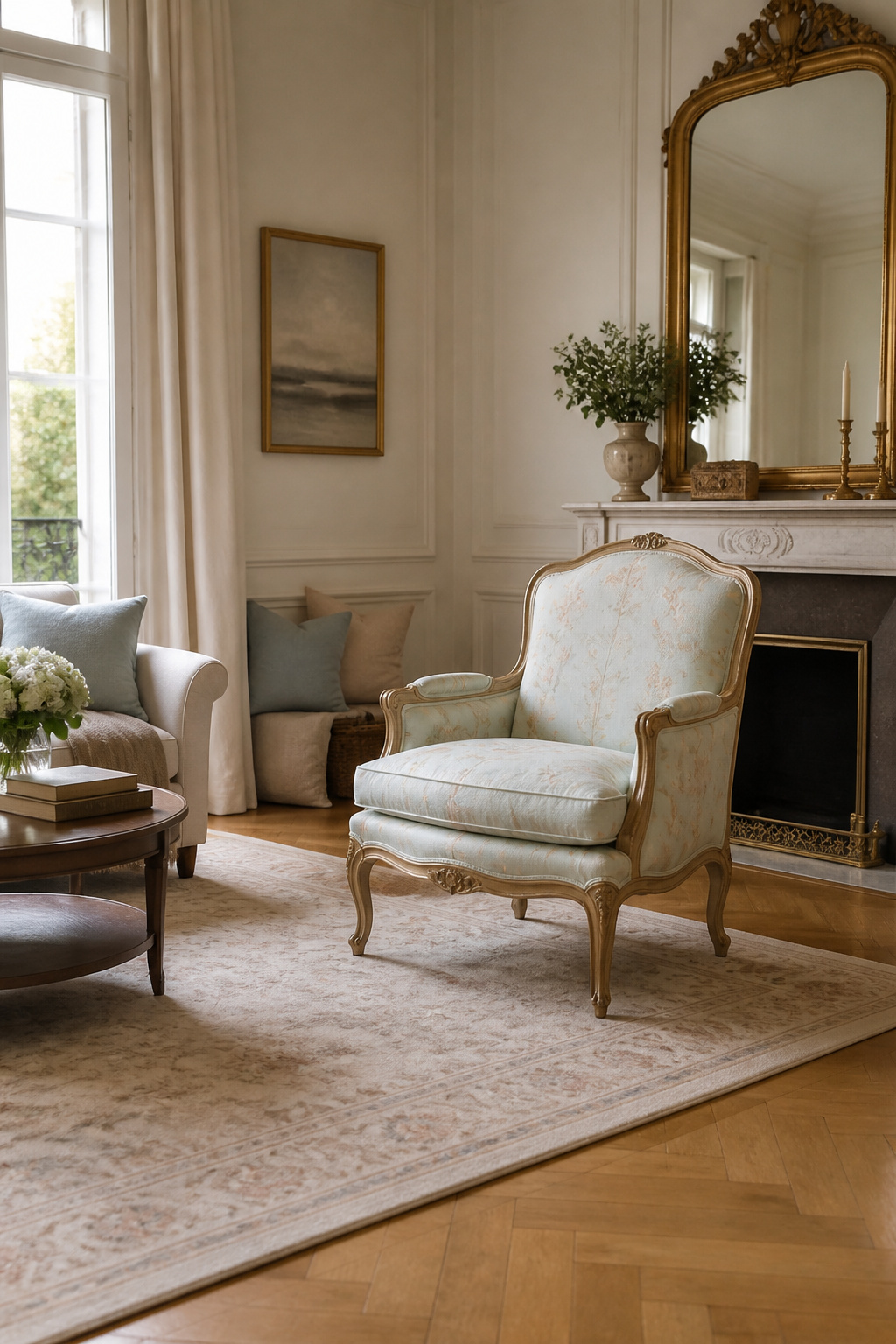
A bergère chair’s loose seat cushion and exposed wooden frame split the job into two separate costs: upholstery work and wood finishing. The cushion is often the only upholstered part, while the back and arms may be caned, carved wood, or another hard surface that needs refinishing rather than fabric. That distinction matters because reupholstering a bergère runs $200 to $450, but stripping and staining the frame adds its own line item if the finish is worn.
The cushion itself takes 2 to 3 yards of fabric, which keeps material costs modest compared to fully upholstered pieces. Padding replacement drives part of that price too; a flattened seat needs new foam or down, and the amount required adjusts the total. Most bergère chairs that need work are antiques, so the labor runs slower and costs more than a contemporary version with cleaner lines and fewer repairs. If the frame is sound and the finish intact, you might get away with fabric and padding alone. I would check both before budgeting, because finding halfway through that the wood needs attention turns a single invoice into two.
Parsons Chair
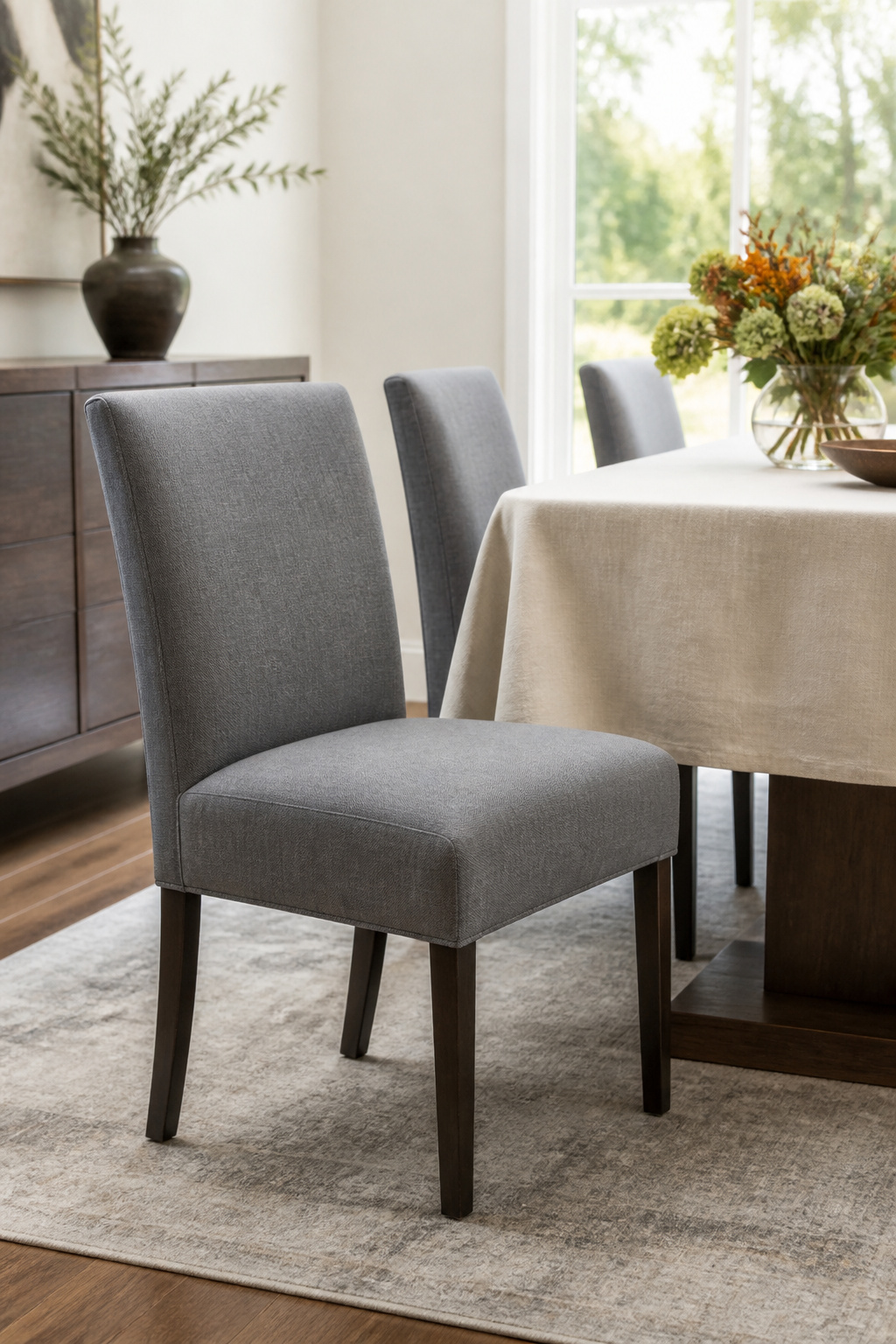
A Parsons chair strips upholstery down to its simplest form: a straight back, no arms, and fabric panels that fit almost like a slipcover. That simplicity matters when you’re pricing the job, because fewer seams means less labor and a straightforward DIY candidate if you own a staple gun and patience.
The flat planes are forgiving to cut and align. You remove the seat, stretch new fabric over the foam, and staple underneath where no one looks. The back is usually one or two rectangles, sometimes with a single welt cord at the seam where back meets seat. No curves to ease, no arms to notch around.
I see this shape at estate sales with sun-faded linen that someone abandoned rather than replace. The mistake they made was assuming any upholsterer would charge less than a new chair costs. For a Parsons chair, that math actually can work in your favor if the frame is solid. But if you’re paying full labor for fabric that runs under $20 a yard, the total can still land near the price of a decent replacement. The break-even point moves with your willingness to do the unskilled parts yourself: stripping old fabric, hauling the piece, maybe even attaching the new panels while a pro handles the welt or any foam replacement.
Club Chair
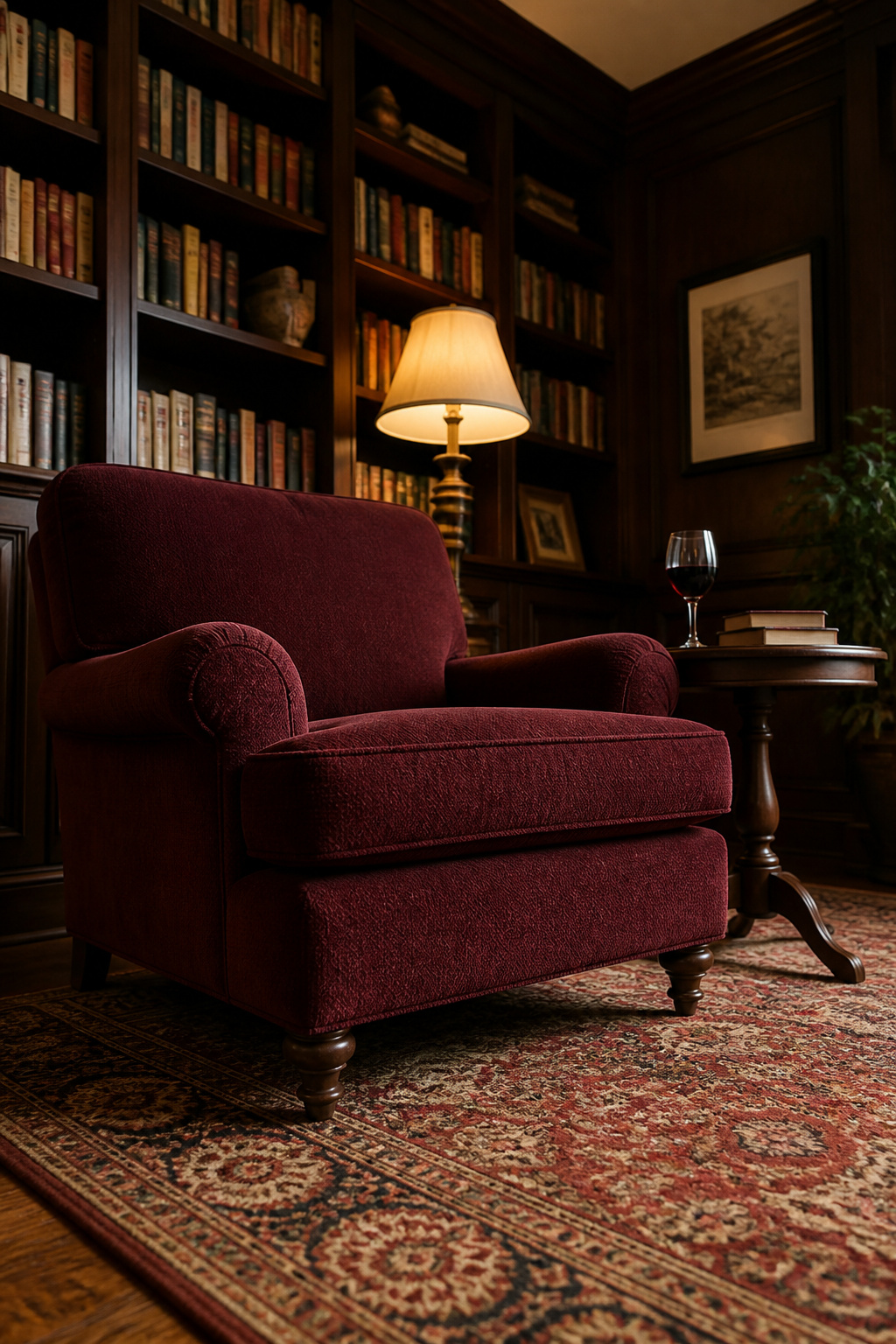
A club chair’s deep, low, often overstuffed form eats fabric faster than it looks like it should. Most need 3 to 5 yards, and the rolled arms are where the yardage disappears; the fabric has to be worked in sections, eased and tucked around curves that don’t lie flat. The seat itself is usually thick enough that the upholsterer is fitting around three dimensions of cushion, not just covering a flat plane.
The labor runs $280 to $900, with the high end usually hitting chairs that have buttons to remove and replace. Tufting or a buttoned back adds hours because each one gets tied through to the frame, and if the original leather has shrunk or the holes have elongated, the new work takes even longer. I’ve watched quotes climb when the chair turned out to have a pillow top or a skirt that wasn’t obvious in the photo sent ahead.
If the chair is one of the old smoking-chair shapes with a tight back and no loose cushion, the labor can actually drop; there’s less to disassemble and fewer pieces to pattern. But that saving gets eaten if the frame needs work, which it often does on anything low enough that people have been dropping into it for decades.
Slipper Chair
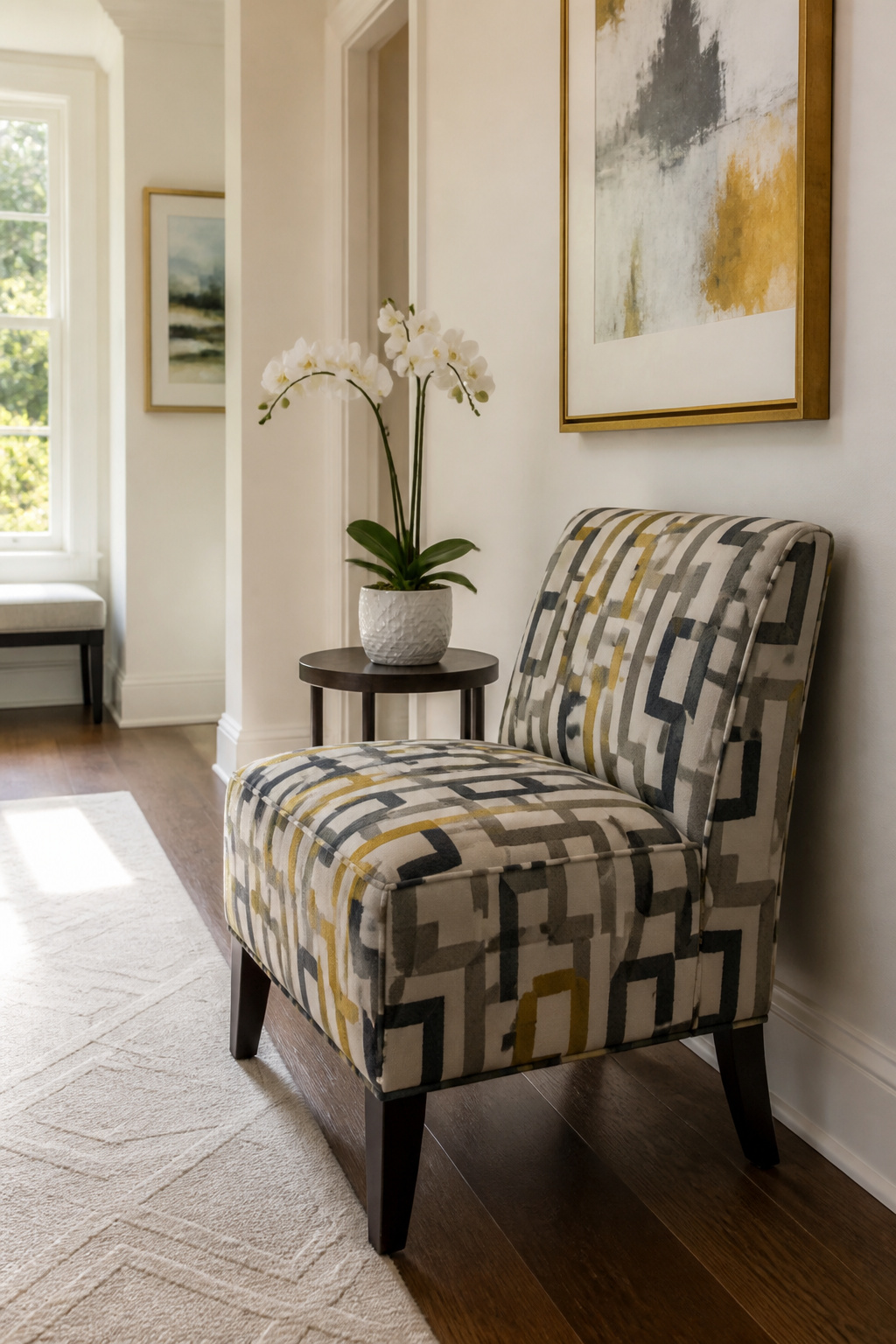
The slipper chair sits low and armless, which sounds like it should make for an easy reupholstery job. The frame is smaller, the fabric yardage drops, and the thing probably fits through a doorway without the usual wrestling match. But that compact shape hides work. The tight upholstery on a slipper chair leaves no place to hide a sloppy seam, and the curved lines that tuck under the seat require hand-fitting that eats hours whether the chair is large or small.
I priced one out last spring for a bedroom corner. The quote came in only slightly below what I’d been given for a standard armchair, which surprised me until the upholsterer showed me the pinning. Every curve in the frame demands the fabric be eased and tacked in small sections. Skimp on that fitting and the seat puckers within a month.
For a simple rectangle of a slipper chair in plain weave, you’re looking at the lower end of the range. Add a skirt, a tufted back, or any lumbar pillow in matching fabric, and the hours jump fast. The chair’s footprint is small; the labor, less so.
Fabric Costs by the Yard
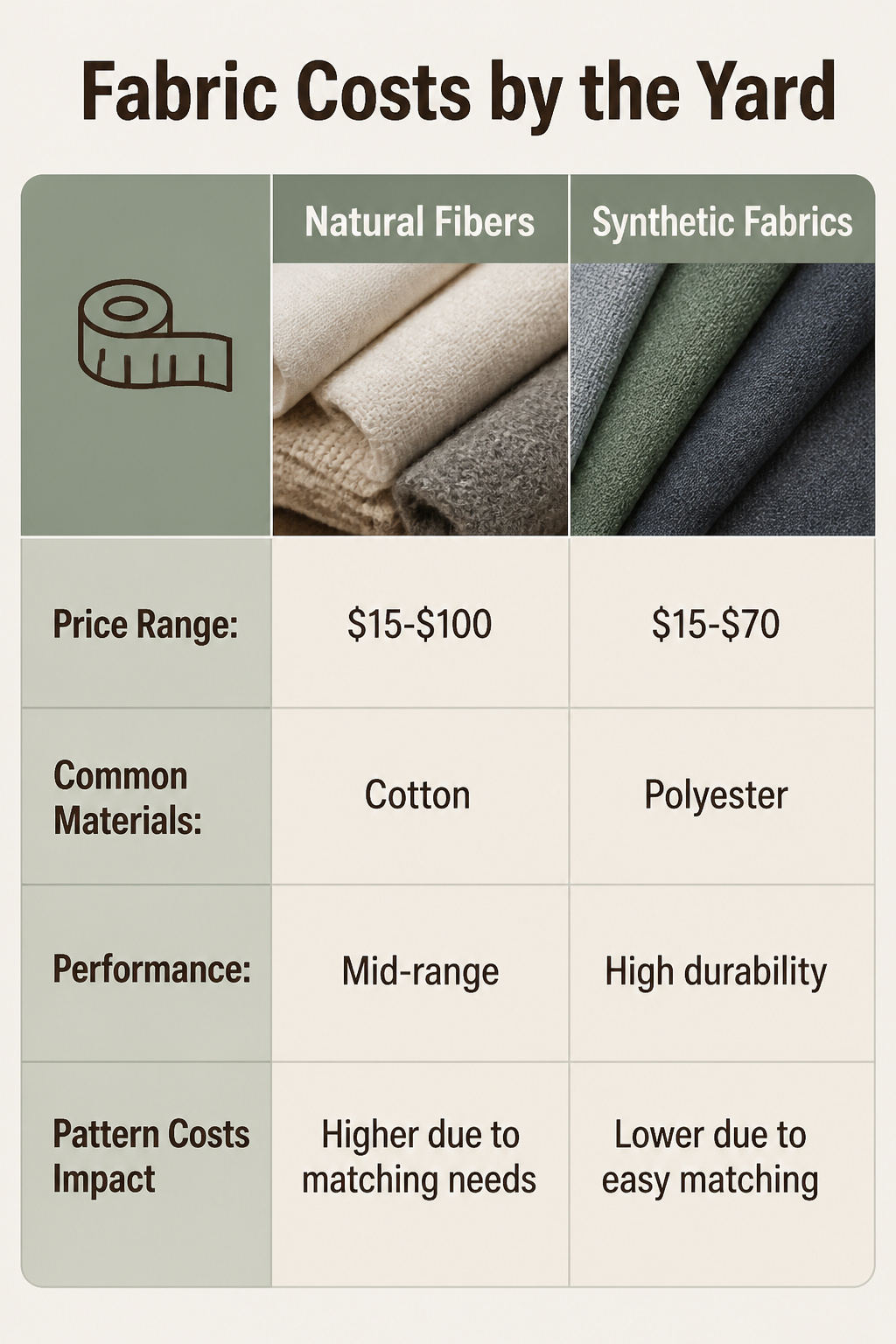
Fabric runs from $15 to $100 or more per yard, and the gap between those numbers matters more than most people expect going in. I spent an afternoon once comparing swatches for a dining chair I wanted to rescue, and the difference between a basic cotton-poly at the low end and a heavy performance weave at mid-range was about forty dollars per yard. For a small seat that only needed two yards, the upgrade felt reasonable. For a wingback that eats six to ten yards, that same jump adds up fast.
Natural fibers sit at both ends of the price scale. Cotton starts cheapest, though pure cotton with a tighter weave pushes higher. Linen and wool land in the middle, with wool-nylon blends holding up better against pilling and fading. Leather and silk top the range; leather is sold by the hide, not the yard, so it breaks the usual math entirely.
Synthetics and blends are where most weekend projects land. Polyester, microfiber, and basic cotton blends cluster in that $15–$30 band. Step up to performance wovens or commercial-grade poly-blends and you’re looking at $30–$70, which is where I ended up for that dining chair. The fabric outlasted the frame.
Patterned fabrics quietly cost more than the sticker price suggests. Matching stripes or large repeats across multiple panels eats extra yardage, and a chair that technically needs five yards might need seven if the pattern has to line up cleanly. Most chairs fall between 1 and 10 yards total: a dining seat can sip half a yard, while a recliner or wingback gulps closer to the top of that range. Measure twice, and then add a yard for pattern matching if you’re not working with a solid.
Labor Rates and What Changes Them
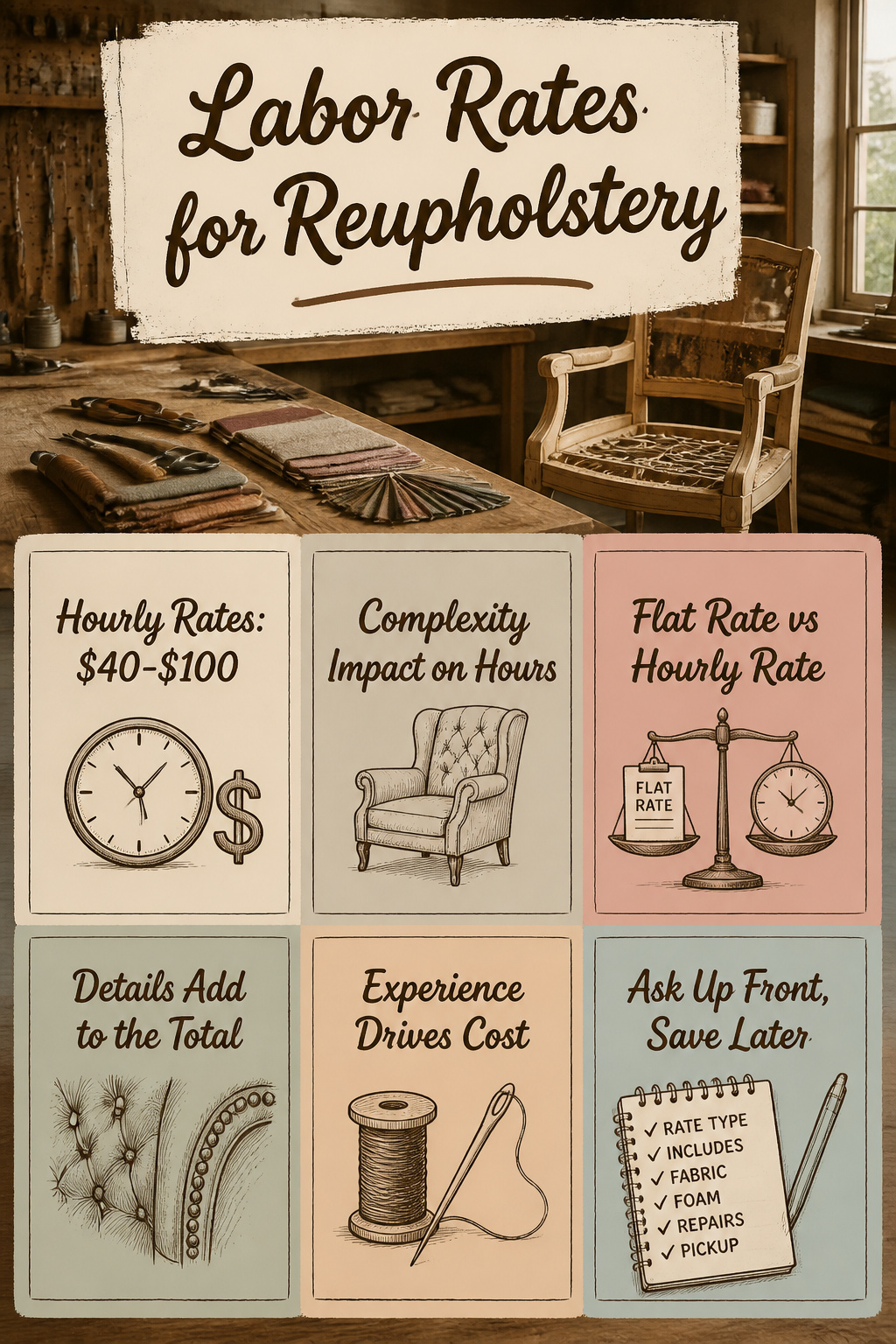
Labor rates for reupholstery run $40 to $100 per hour, though some shops skip the clock entirely and quote a flat rate based on the piece itself. The flat-rate approach makes budgeting easier, especially when hidden frame damage or spring work turns up mid-project, while hourly pricing can balloon if the chair fights back.
An upholsterer in Chicago or Brooklyn sits at the top of that range; the same chair in a smaller market might cost half as much for the same hands. Experience matters too, a shop that specializes in antiques or channel-back tufting charges more because the work takes longer and the mistakes are permanent.
Complexity multiplies hours fast. Tufting, nailhead trim, curved arms, or attached cushions each add patterning time and sewing precision. A straightforward seat might take four to eight hours, while a channel-tufted wingback with piping can eat ten to twenty. Some of those details, like tufting alone, can add $150 to $500 to the total.
When I collected quotes for a mid-century armchair last year, I learned to ask two things up front: whether the rate is hourly or flat, and what exactly the quote includes, fabric, foam, repairs, pickup. One shop’s seemingly higher flat rate turned out cheaper than an hourly quote once teardown revealed split corner blocks.
Frame Repairs and Extra Work
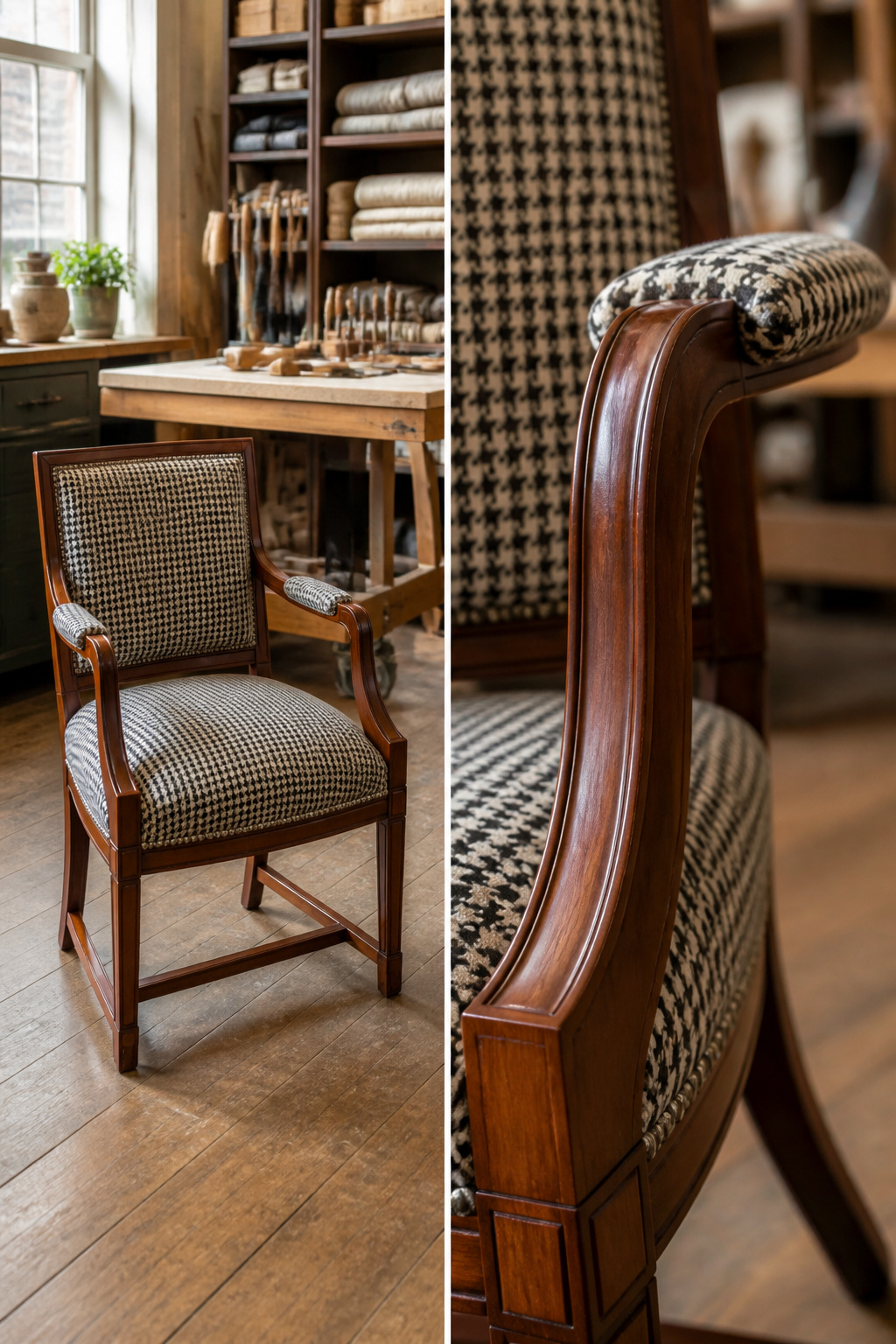
Stripping the old fabric off a chair is where the real conversation starts. What looked like a straightforward refresh on the outside can reveal cracked glue joints, sagging webbing, or springs that have lost their tension entirely. An upholsterer may recommend regluing the frame, retieing or replacing springs, or installing new support straps, and each of these turns a cosmetic job into structural work. Spring replacement or retie adds $150–$400, frame reinforcement runs $100–$350, and new webbing lands at $75–$200. Padding often needs attention too, with new seat foam at $40–$120 per cushion and back cushion refills starting around $30, while new decking or dust covers can tack on another $50–$200. Some shops call before proceeding with extras, some do not, so asking how surprises get handled and getting price ranges in writing keeps the final bill from drifting. Budgeting an extra 20% over the base quote is a practical cushion for what only becomes visible once the old covering is gone.
DIY or Hire It Out
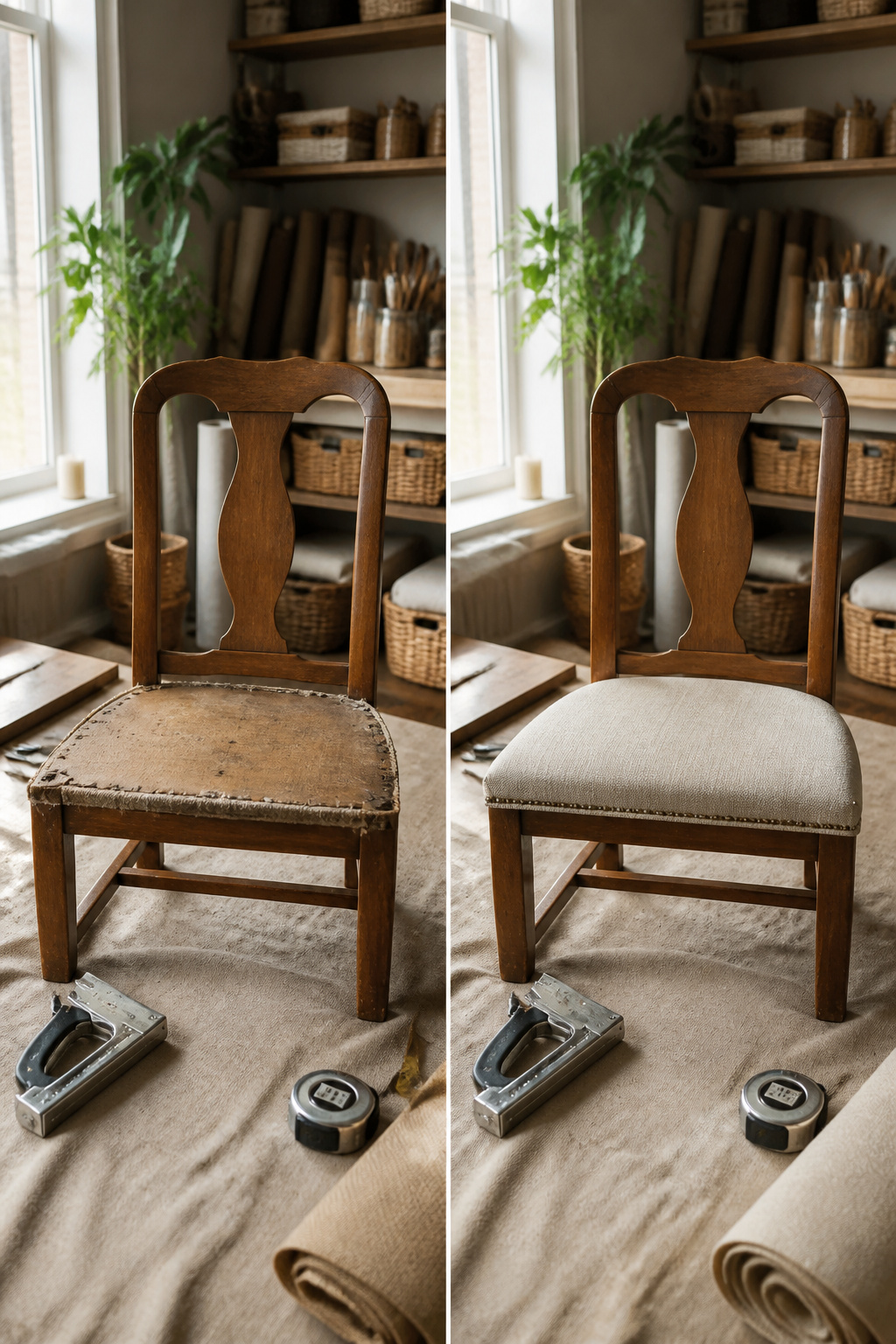
A simple seat with a flat cushion and four exposed legs is where most people should start if they want to try this themselves. Fabric and supplies run $100 to $400, and the tool list is short: a staple gun, pliers, upholstery needles, scissors. That is the whole equation for a dining chair or basic accent piece.
The hidden math starts when the shape gets more interesting. A wingback, barrel chair, or anything with tufting means pattern matching at every seam, retensioning springs, and rebuilding padding in layers. Amateur work on those silhouettes tends to read as amateur from across the room. The fabric alone averages $50 to $70 per yard, and one miscut on a complex piece turns into a reorder, not a workaround.
I have watched the tool cost pile up in my own planning. Sewing equipment, finishings, the right needles and thread for the weight of the fabric. It does not take many trips to match what a pro would have charged to handle the whole job. Transport is another line people forget. Moving a single chair to a shop runs $83 to $208 per hour for short local hauls; long distance can climb past $780. For a dining chair reupholstered around $71, that second trip can cost more than the labor.
For antiques, mid-century frames with good bones, or anything you plan to sit in daily for years, the pro price of $300 to $1,100 buys the rebuild and the finish that survives scrutiny. DIY saves money only when the project stays simple enough that the first attempt is also the last.
When a New Chair Makes More Sense
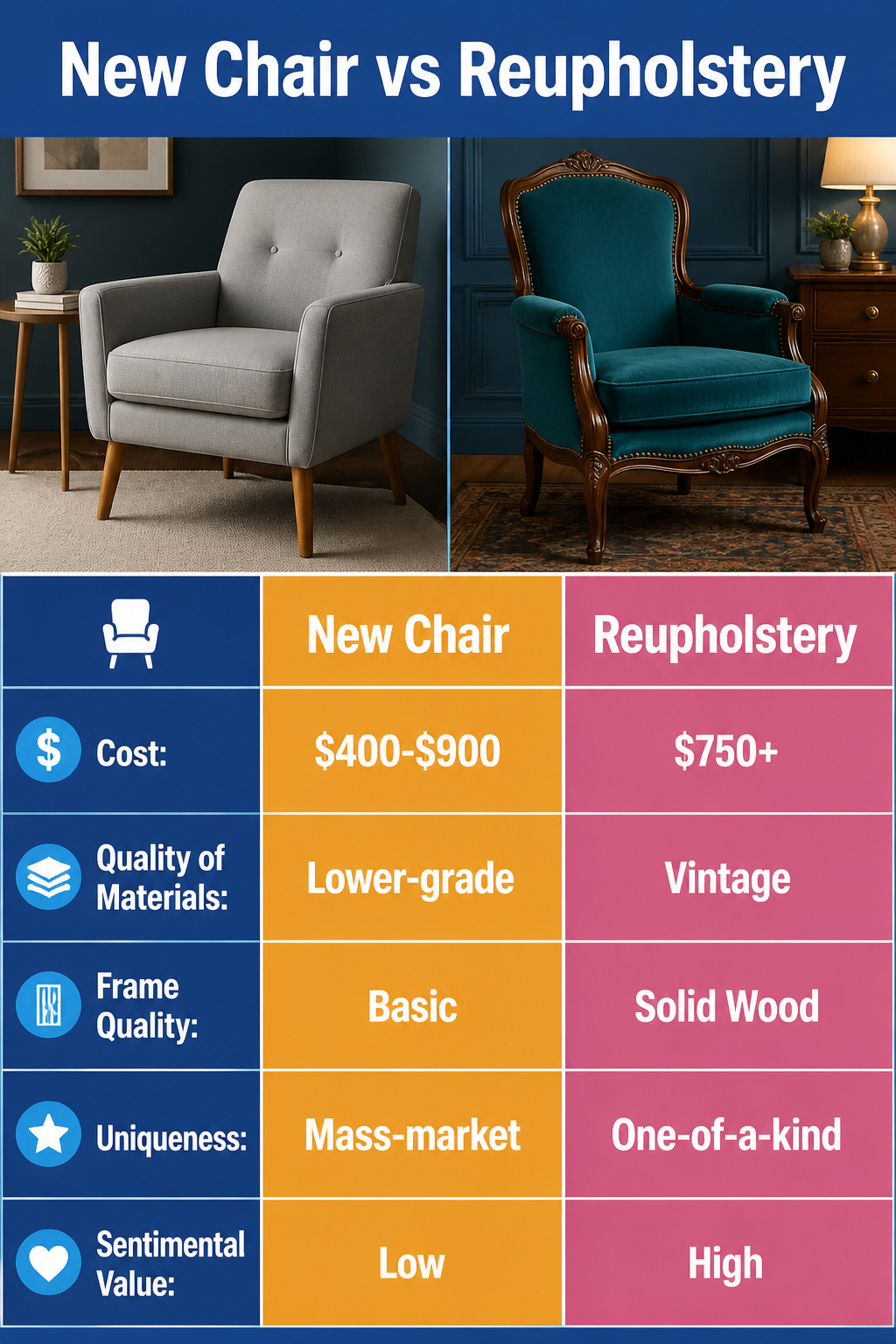
A budget new chair often costs less than professional reupholstery, even before you add fabric. Mass-market seating in the $400–$900 range usually runs on lower-grade frames and basic foam, and replacing one of these is almost always the cheaper move. The math flips when the frame is the thing you actually want to keep. Solid wood construction, a vintage piece you cannot replace, or simply a chair that fits your space in a way nothing new does: those are the cases where reupholstery earns back its price. Sentimental value counts here too. A family heirloom will likely cost more to recover than a retail replacement would, but the replacement is not the same object, and that distinction is worth naming out loud before you decide.
Frequently Asked Questions
Is it cheaper to buy a new chair or reupholster an existing one?
Buying new can be cheaper at the low end, but reupholstering pays off long-term. A quality reupholstered chair outlasts a cheap replacement, and the gap narrows on mid-range pieces where the frame is still solid.
How long does the reupholstery process typically take?
Fabric replacement alone runs 15 to 24 hours of actual labor, but a full service with frame repairs, spring work, and padding can stretch to a month or more depending on the shop’s queue and the chair’s condition.
What factors affect the cost of reupholstering a chair?
Chair type and fabric choice drive most of the price. Labor rates, pattern matching, frame repairs, and extras like tufting or cording fill out the rest. A dining seat might run $60 while a wingback hits $1,750 for the same reason: hours and yardage multiply fast.
How many yards of fabric do I need to reupholster a chair?
Most chairs need 1 to 10 yards. A dining seat takes as little as half a yard, a tub chair 2 to 4 yards, and a wingback or recliner 6 to 10 yards. Pattern matching can push you toward the higher end of any range.
Leave a Reply