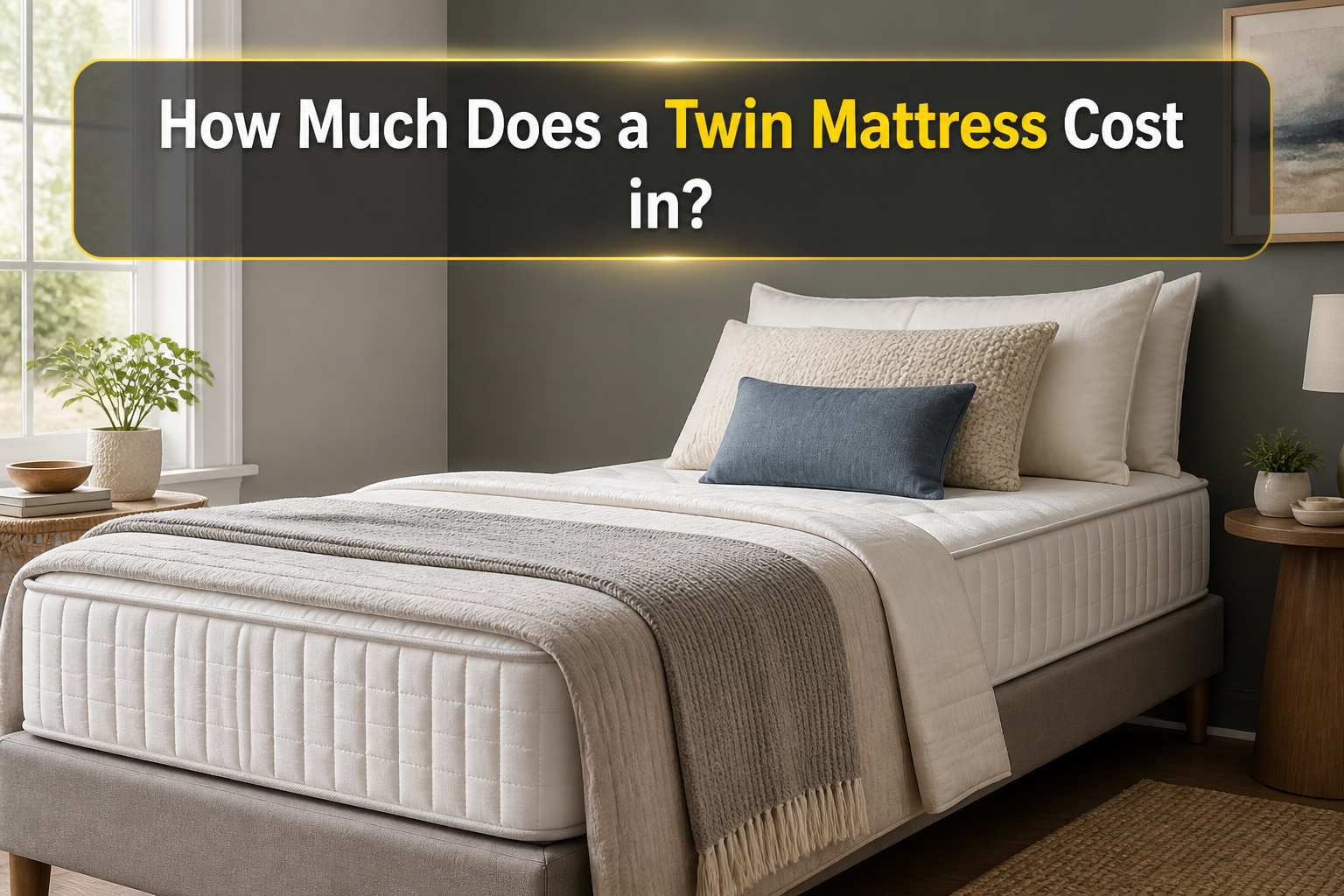
A twin mattress costs between $300 and $1,500, though the actual price depends more on the materials inside than the brand stitched on the side.
The Sleepy’s Basic Innerspring Firm lands at $249.99 for a bare-bones guest room option, while denser memory foams and hybrid builds push well past $1,000.
Twin Mattress Dimensions and Who They Fit
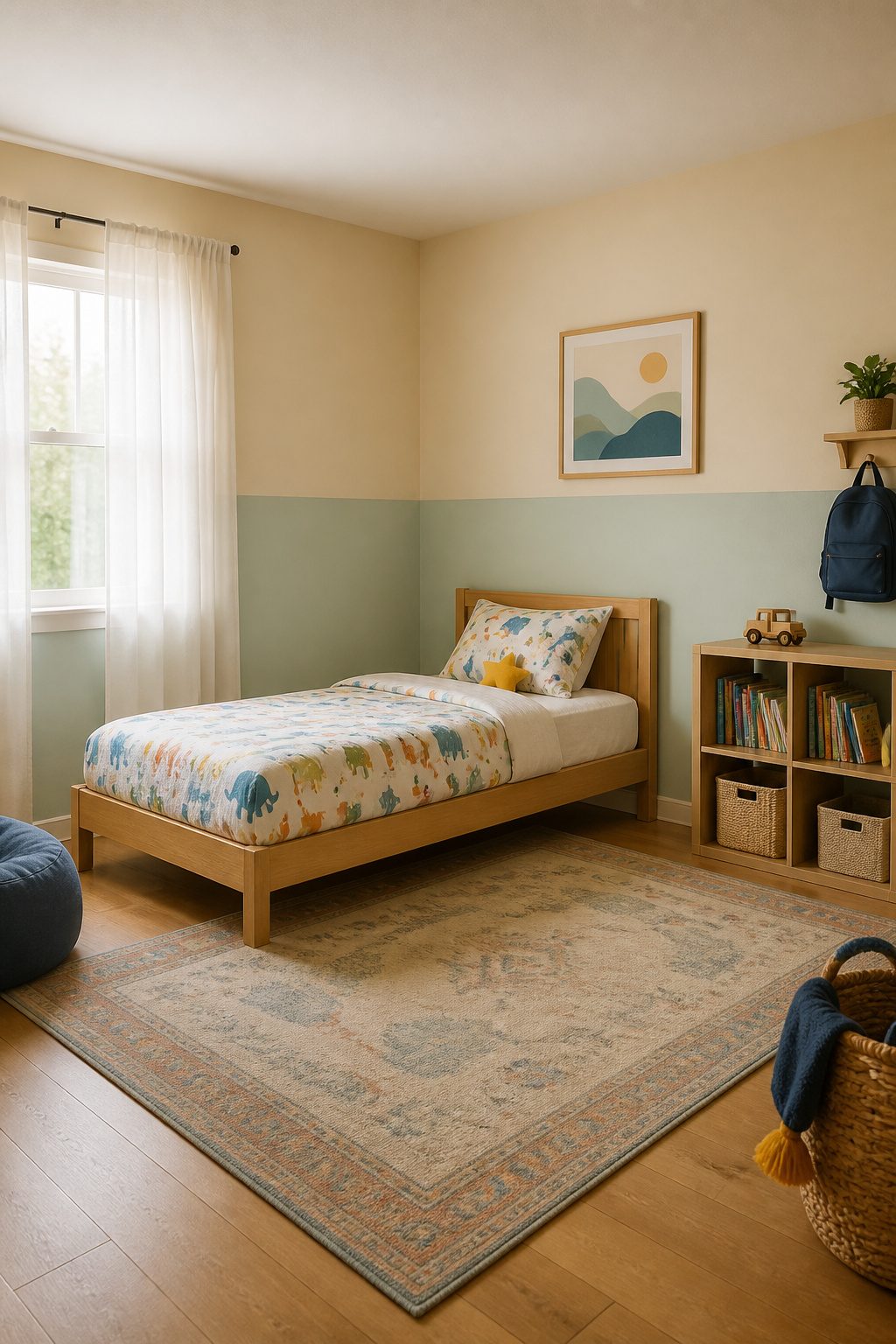
A twin mattress measures 38 inches wide by 75 inches long, making it the smallest standard bed size available. Some retailers list it at 39 inches wide, so that inch of variation matters when you’re fitting a tight space.
Those dimensions work for children moving out of toddler beds, single adults in studio apartments, and anyone building a bunk setup where overhead clearance is tight.
The 75-inch length fits sleepers under six feet comfortably; anyone taller will want the twin XL at 80 inches instead.
Guest rooms with limited floor space are where twins really earn their keep. A 7-by-10-foot room can hold one with walking room to spare, which is why so many rental units and college dorms standardize on it.
At 38 by 75 inches, a twin is the smallest standard mattress size. It’s a natural fit for kids’ rooms, bunk beds, and smaller spaces.
That compact footprint is why twin mattresses tend to cost less than any larger size, and why the price range you’ll actually shop is narrower than the headlines suggest.
Recommended Products
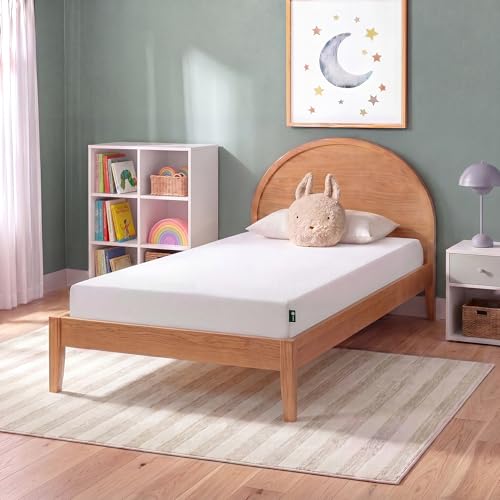
ZINUS GREEN TEA MEMORY FOAM – Patented zoned pressure relief, medium firm feel, breathable knitted cover, and a durable base foam — every layer engineered to contour, support, and move with your body for a better night's sleep.

TRADITIONAL SUPPORT, BETTER FOR THE PLANET – This reliably comfortable hybrid will provide even support night after night and arrives to you in a new smaller box that reduces its carbon footprint

VENTILATED GEL FOAM: Gel-infused memory foam mattress enhances airflow and regulates temperature, helping you stay cooler and more comfortable throughout the night for deeper, uninterrupted sleep.
What a Twin Mattress Costs
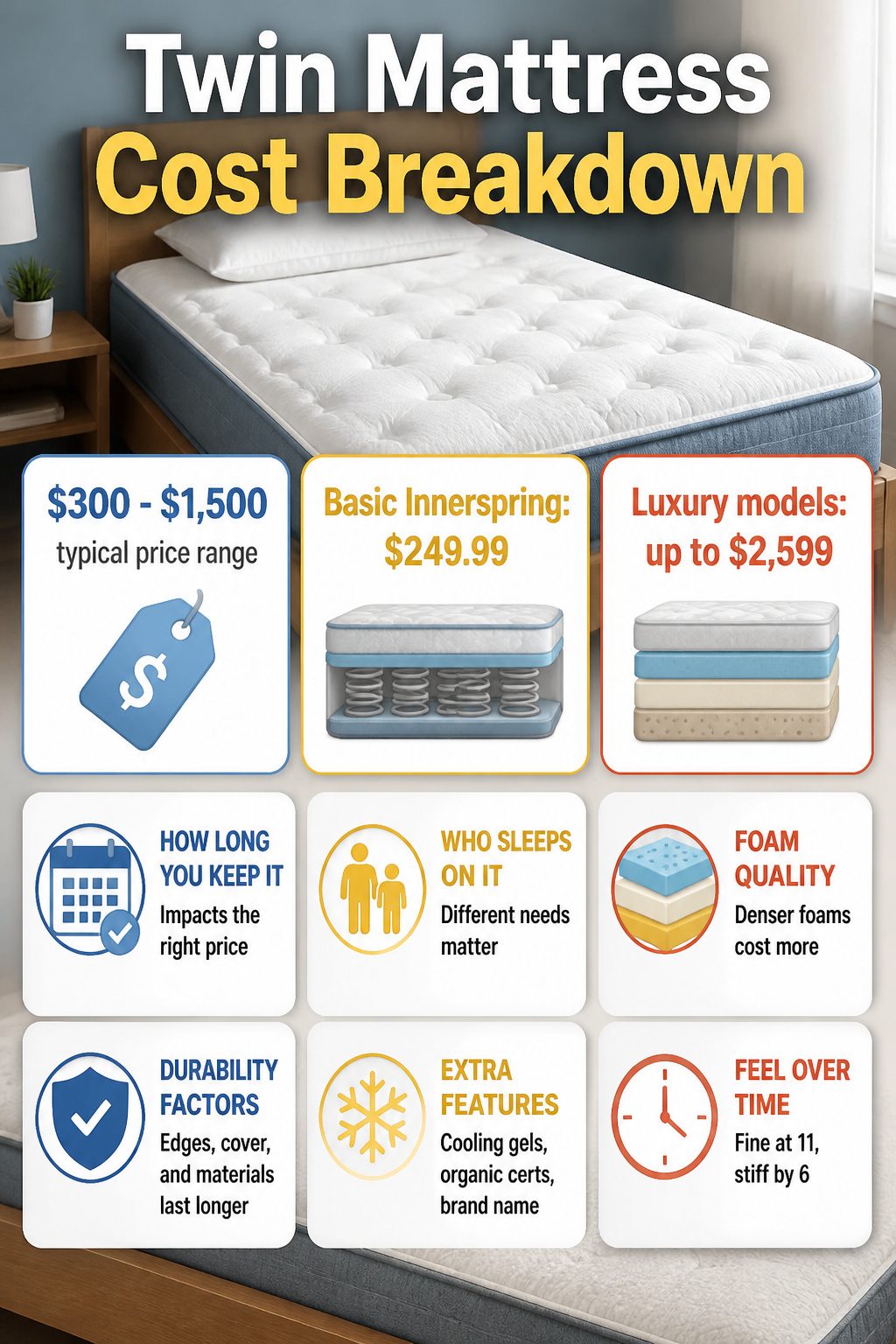
A twin mattress typically costs between $300 and $1,500, with most buyers landing somewhere in the middle after accounting for what they actually need versus what the showroom floor sells them.
The Sleepy’s Basic Innerspring Firm, for instance, runs $249.99 and handles the job for a guest room or a kid who outgrows things fast.
I have seen plenty of people spend that amount, add a cheap topper, and sleep fine for years.
Step up to around $600 and the foams get denser, the edges stop collapsing when you sit to tie your shoes, and the cover actually survives a washing.
Luxury models top out near $2,599, though at that point you are paying for cooling gels, organic certifications, or a brand name that shows up in unboxing videos more than any real extra sleep.
The gap between $249.99 and $2,599 comes down to how long you plan to keep it, who sleeps on it, and whether you can live with a mattress that feels perfectly fine at eleven o’clock but leaves you stiff by six.
Recommended Products

GEL-INFUSED MEMORY FOAM – Adapts to your body, offering personalized comfort and precise support

COOLING COMFORT AT A GREAT VALUE – Cooling Gel Memory Foam pulls heat away from your body while a breathable cover promotes airflow throughout the night. Quality cooling comfort at a price that works for you.

VENTILATED GEL FOAM: Gel-infused memory foam mattress enhances airflow and regulates temperature, helping you stay cooler and more comfortable throughout the night for deeper, uninterrupted sleep.
Memory Foam, Innerspring, and Hybrid Types
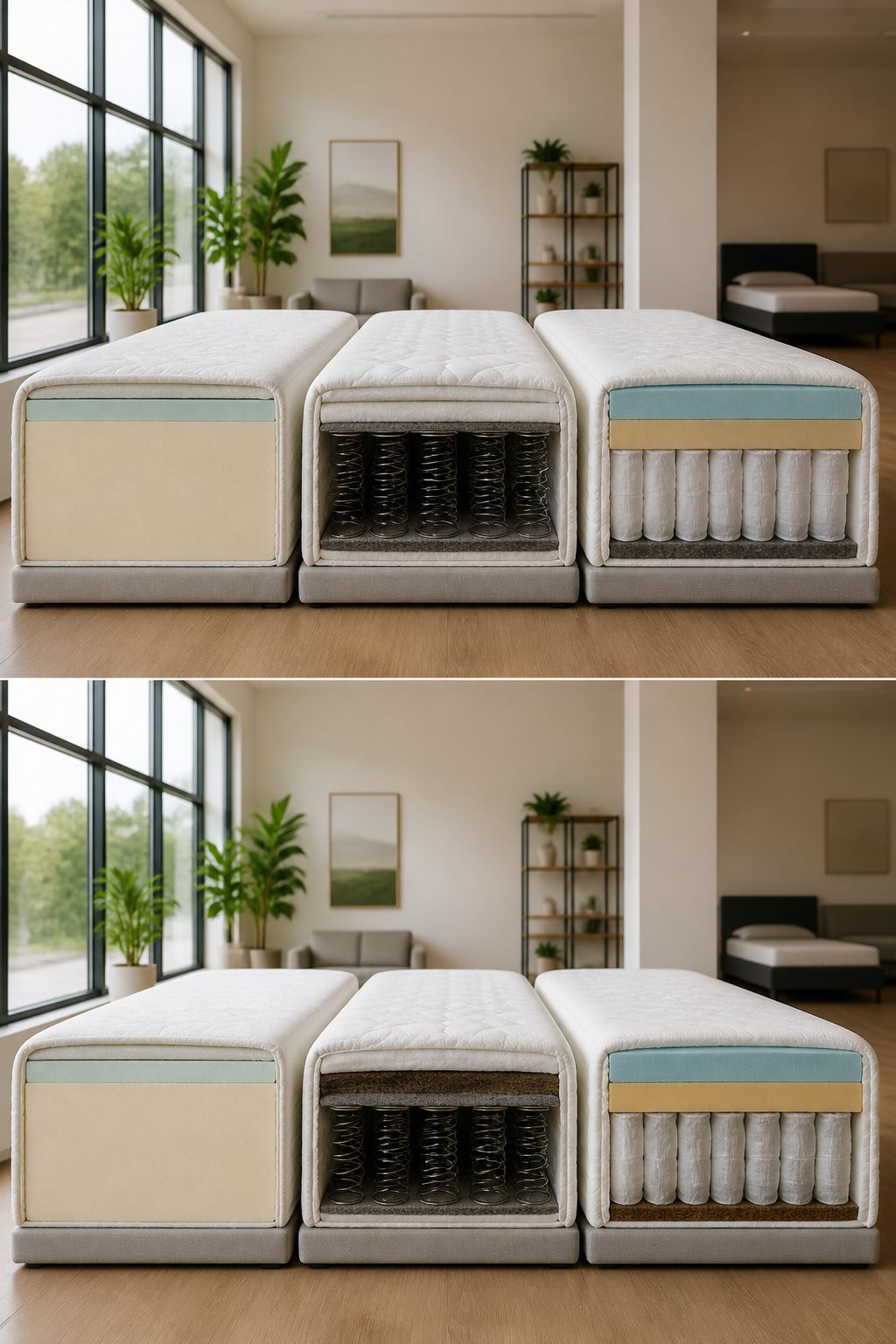
Memory foam hugs the sleeper, absorbing pressure at shoulders and hips, though standard versions trap heat unless gel infusion or open-cell design steps in.
For a renter who runs cold or sleeps on their side, that contouring can justify the tradeoff.
Innerspring keeps the familiar bounce with coils as the support layer and a thin foam cushion on top; it breathes better than solid foam but offers less pressure relief and transfers more motion.
Hybrid splits the difference, pairing pocketed or Bonnell coils with a thicker comfort layer of latex, memory foam, or polyfoam, which is why the category sits higher in price and why active sleepers who want durability tend to land here.
Natural latex, drawn from rubber tree sap, runs cooler and more responsive than synthetic foam and appeals when eco-friendly matters, though it is the least common of the four.
The construction you choose moves the price more than the brand name stitched on the side.
Recommended Products

SIMPLE SETUP AND QUICK EXPANSION: Mattress is compressed, rolled, and sent in a box, open your mattress promptly upon receiving it and allow 24 to 72 hours for full expansion; mattress may expand more quickly in a warm room

COMFORTABLE HYBRID SUPPORT – The NEO SLEEP 8-inch Twin mattress features a medium plush feel with a soft comfort foam layer over evenly supportive innerspring coils, helping distribute weight evenly for consistent support across all sleeping positions.

Engineered for Deep Sleep: This twin size mattress features innerspring technology delivering precision point-to-point support. Comfort foam layer evenly distributes pressure, relaxing every muscle. Wake up refreshed and energized after truly restorative deep sleep on Avenco twin mattress
How Materials and Brands Move the Price
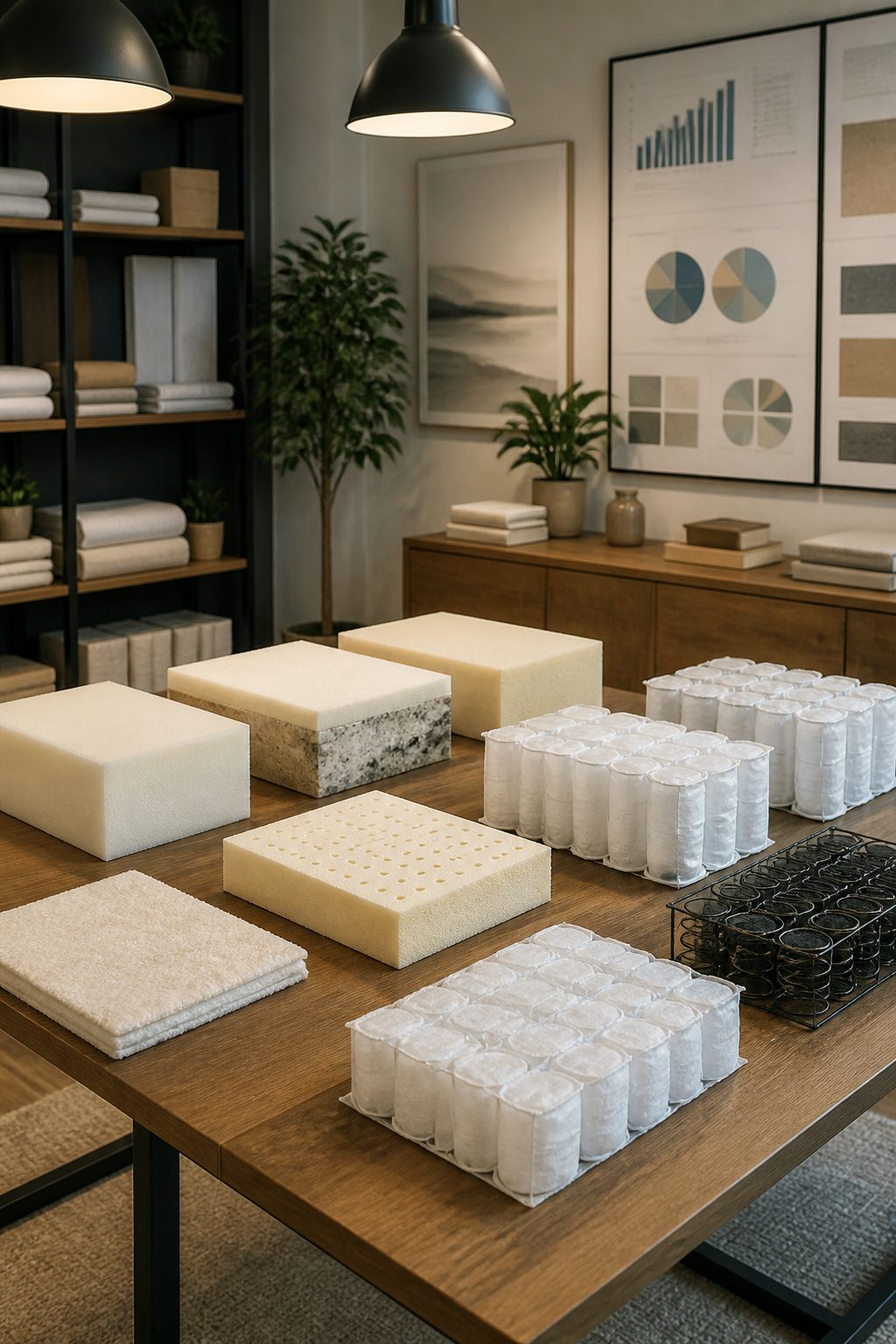
Density and coil count are where manufacturers hide most of the markup.
A 6-inch memory foam with 3 pounds per cubic foot of density costs less to produce than one with 5 pounds, but the price gap on the floor can be thirty or forty percent because the denser foam lasts roughly twice as long before softening into a hammock.
I learned to check that number after replacing a cheap twin in under three years; the replacement cost more upfront and was still the cheaper path.
Organic cotton, natural latex, and GOTS-certified wool add material costs that almost always pass straight to the buyer.
Specialty foams like copper-infused or gel layers follow the same rule. Brand reputation works separately: a name that runs national advertising and operates showrooms builds that cost into every unit, including the twins.
The mattress itself might come from the same factory as a direct-to-consumer label with half the recognition and a lower tag.
Twin XL mattresses run slightly higher than standard twins for the same build, simply because the extra five inches of length needs more material.
The brand premium stays roughly the same in dollars, which makes it a smaller percentage of the total but still real money on a tight budget.
Recommended Products

Pressure Relieving Plush Contouring Memory Foam: Designed for use over your existing mattress, high‑density gel‑infused plush memory foam hugs your body curves to minimize pressure points for restful sleep. It refreshes worn mattresses and softens hard beds to extend mattress lifespan, perfectly suited for side, back and stomach sleepers with full contour support

Built for Comfort: 2 inch of AeroFusion Memory Foam is crafted to fit body's micro pressure points and conform to body's curves and shape for comfort throughout your sleep. Putting the topper on top of the mattress and under the mattress cover will give you a new and softer mattress, extending the life of the mattress and giving you a new sleep experience.
Built for Comfort: 3 inch of AeroFusion Memory Foam is crafted to fit body's micro pressure points and conform to body's curves and shape for comfort throughout your sleep. Putting the topper on top of the mattress and under the mattress cover will give you a new and softer mattress, extending the life of the mattress and giving you a new sleep experience.
Finding Sales and Timing Your Buy
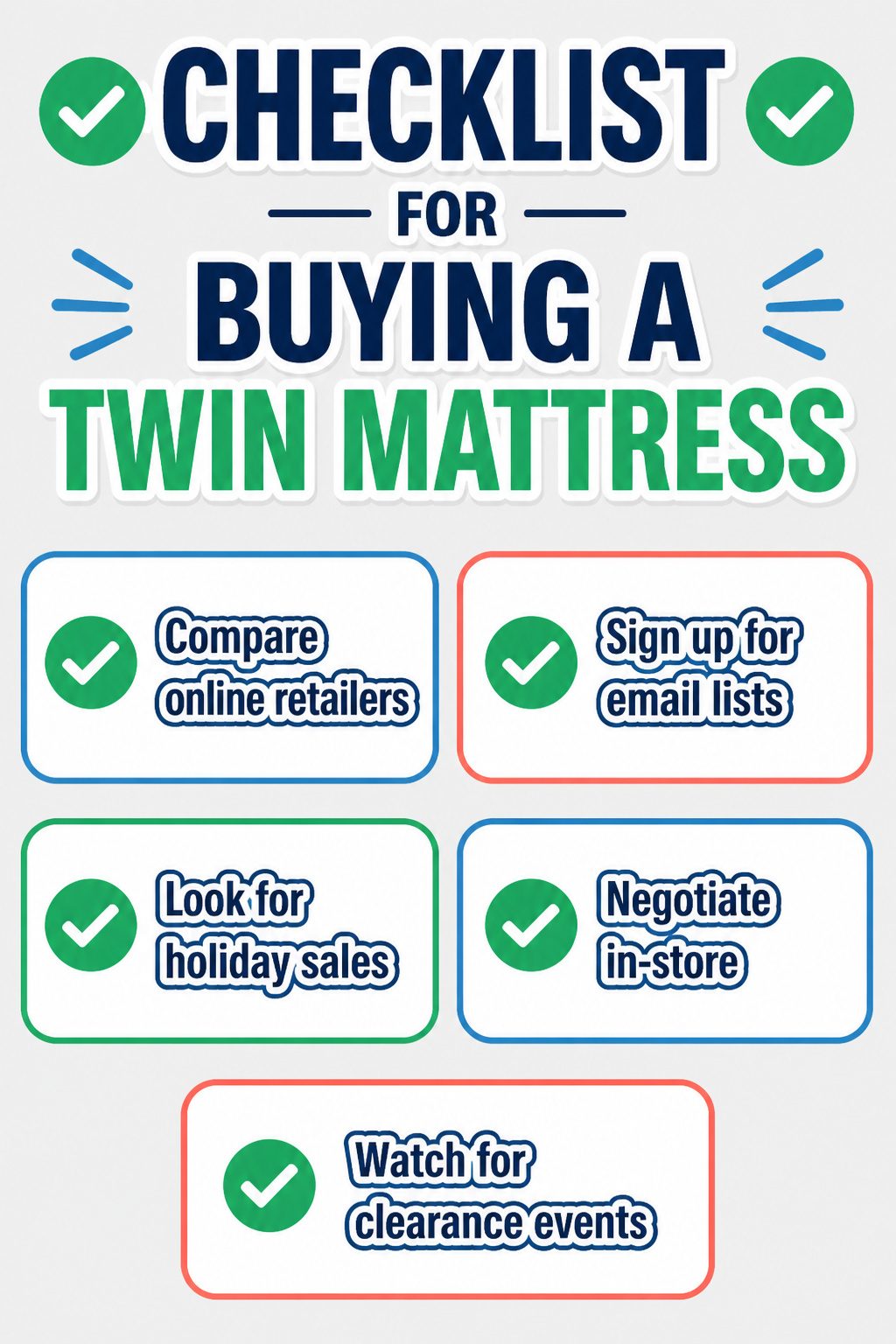
Online retailers usually run lower prices than brick-and-mortar stores because they are not paying for showroom space and floor staff.
The competition between them is fierce enough that free shipping has become standard, which wipes out the gas and hauling you would spend driving between furniture rows.
Holiday weekends are the obvious windows, but the better move is quieter.
Sign up for email lists from the brands you are actually considering. Those lists get the coupons first, and the discounts often land outside the big sale weekends when inventory is actually moving.
If you are patient and watch the specific models on your short list, you can strike when a genuine clearance hits rather than buying marked-up stock dressed in red tags.
Offline, you can still negotiate, especially on floor models or bundled sets. A store employee will sometimes knock something off if you are buying the frame and mattress together.
But the time cost of that back-and-forth, plus the limited selection in any one place, usually eats the savings for a twin. At this size, the convenience of a box arriving at your door tends to win.
Recommended Products

COMFORTABLE HYBRID SUPPORT – The NEO SLEEP 10 inch Twin Mattress ensures ultimate comfort and balanced support. Soft memory foam layers relieve pressure and reduce fatigue. Responsive pocket springs adapt to your body shape and help maintain natural spine alignment, ensuring the right amount of support to your shoulders and hips. Comfortable for back, stomach, and side sleepers.

COMFORT HYBRID MATTRESS – Combines multiple layers of comfortable memory foam with pocket springs. With a balanced medium plush feel, not only does it distribute weight evenly from head to toe, but it also ensures your body receives proper support. Wake up refreshed and ready to take on the day with the GAESTE Twin mattress.

【MEDIUM FIRM SUPPORT】Enjoy the balance of dependable support and contouring comfort. This hybrid mattress pairs zoned pocket coils with gel memory foam to help keep your spine aligned and ease pressure around your shoulders, hips, chest, and lower back. Its medium-firm feel offers comfortable cushioning with the support you need for everyday rest.
Trial Periods and Warranty Coverage
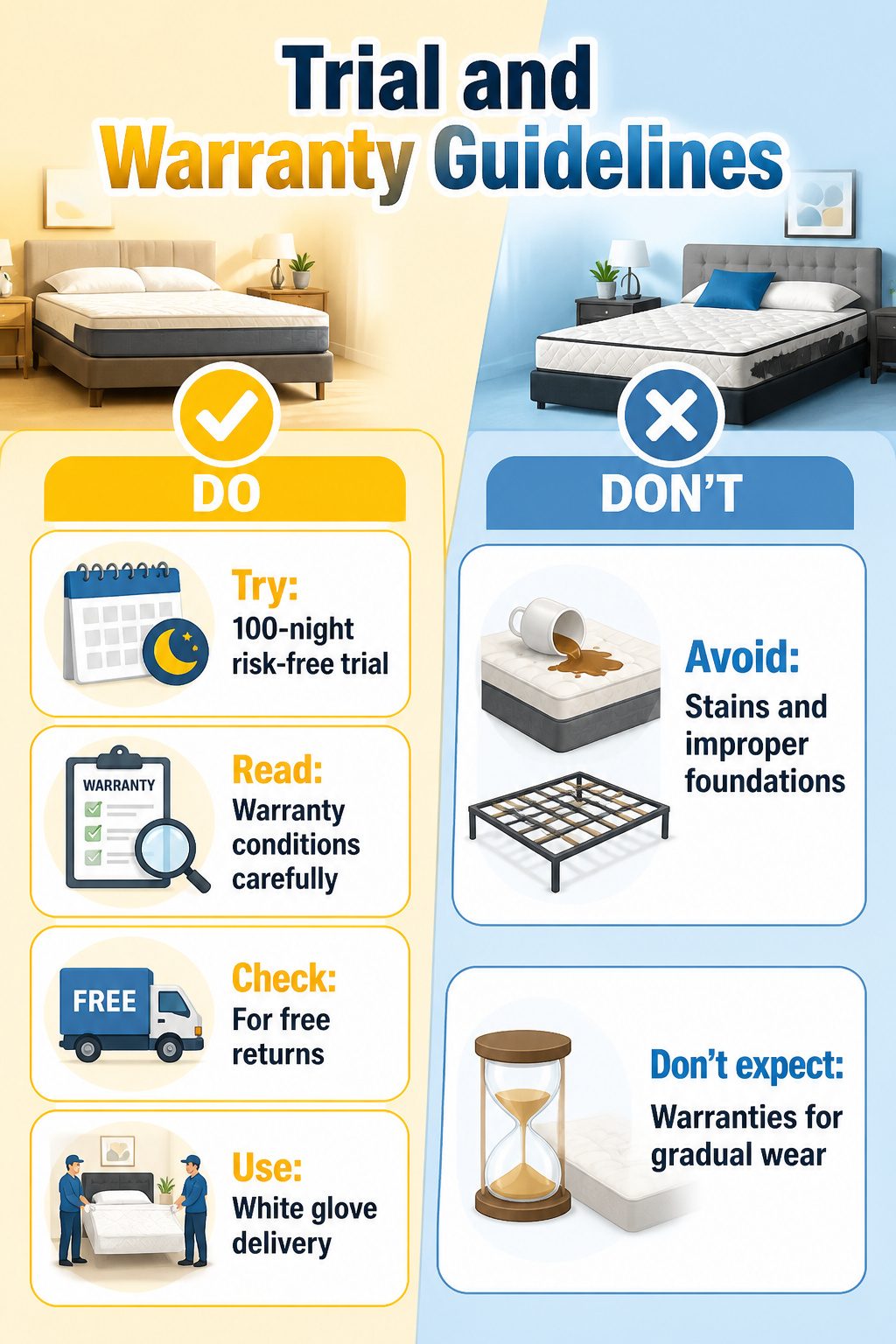
Buying a twin mattress online means skipping the showroom lie-down, so the 100-night risk-free trial most retailers now offer is doing real work for you.
That month or more at home beats five minutes under fluorescent lights, and if the mattress turns out to be wrong, returns are typically free once a short adjustment period passes.
Warranties run a different clock. The limited coverage you see advertised, often around ten years, is meant to catch defects that show up early, not the gradual softening that eventually makes any bed feel tired.
Latex tends to outlast the warranty by a wide margin, while innerspring and hybrid models may need replacing closer to the back half of that window.
What actually matters is reading the conditions before you pay.
Some trial periods require you to sleep on the mattress for a minimum number of nights before returning it, and warranties usually exclude damage from an improper foundation or stained fabric.
White glove delivery, where a crew sets up the bed in your room, can spare you the wrestling match with a compressed box, but it is a separate question from whether the bed itself will hold up.
Recommended Products

Suitable Support for Everyone and All Sleep Positions: Matress of EGOHOME has a high degree of fit with body curve, it will deform with changes in sleeping posture, filling the gap between your body and the mattress, advantage for your spine and promoting smooth blood circulation throughout the body. It also reduces the noise interference caused by turning over, effectively promotes perfect deep sleep.

Temperature-Smart, Night-Long Comfort: Our 6 inch twin mattress uses gel and charcoal-infused memory foam to balance your sleep temperature. Its design draws away moisture and heat, ensuring a consistently dry and comfortable feel all night.
Pressure Relief Memory Foam: This twin mattress uses patented premium memory foam material that provides balanced support while effectively absorbing and evenly distributing body pressure. It greatly alleviating the reaction force on body and relaxing muscles. The stress on joints in contact with the mattress is minimized, which will not add burden to the body while asleep.
Weight and Moving One Yourself
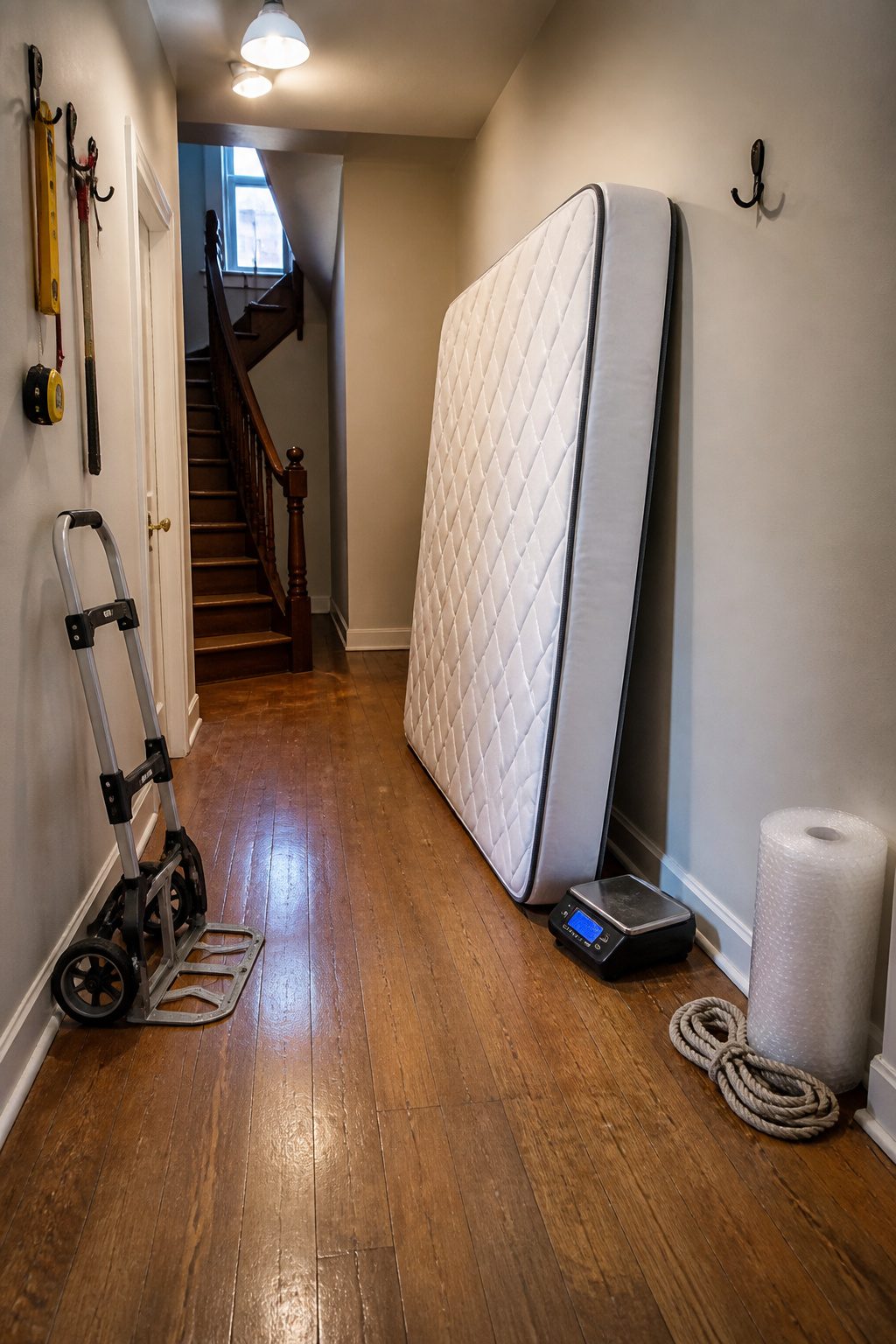
A twin mattress weighs between 40 and 60 pounds, though heavier builds push past that mark. The construction decides it: hybrids and innerspring models carry steel coils that add heft, while all-foam beds sit lighter on the scale.
For renters pulling a solo move up a walk-up or threading through a narrow hallway, those twenty pounds of difference matter.
A 60-pound hybrid with no grip handles becomes awkward fast on a staircase turn. Foam compresses enough to wrestle through a tight doorway; a sprung mattress keeps its bulk and fights back.
I have watched friends learn this the hard way, thinking "small bed, small problem" until the landing corner catches the tag end and the mattress folds wrong.
If stairs are in your future, the lighter foam option earns its place in the cost conversation, not for sleep quality but for the move itself.
Recommended Products

Unparalleled Quality Control – You can rest easy knowing your mattress is made with high standards and eco-conscious practices. Our global production includes U.S.-based and overseas factories for consistent quality. More than 90% of mattress orders are fulfilled by our U.S. factories. Wake up feeling refreshed every morning.
Unparalleled Quality Control – You can rest easy knowing your mattress is made with high standards and eco-conscious practices. Our global production includes U.S.-based and overseas factories for consistent quality. More than 90% of mattress orders are fulfilled by our U.S. factories. Wake up feeling refreshed every morning.

ALL-SEASON COOLING MEMORY FOAM – Enjoy a cool and restful night with our gel-infused memory foam. This advanced technology manages heat, ensuring you stay cool and comfortable. Say goodbye to sweaty, restless nights with GAESTE 5" Twin sized memory foam mattress.
Bedding, Shipping, and Setup Add-Ons
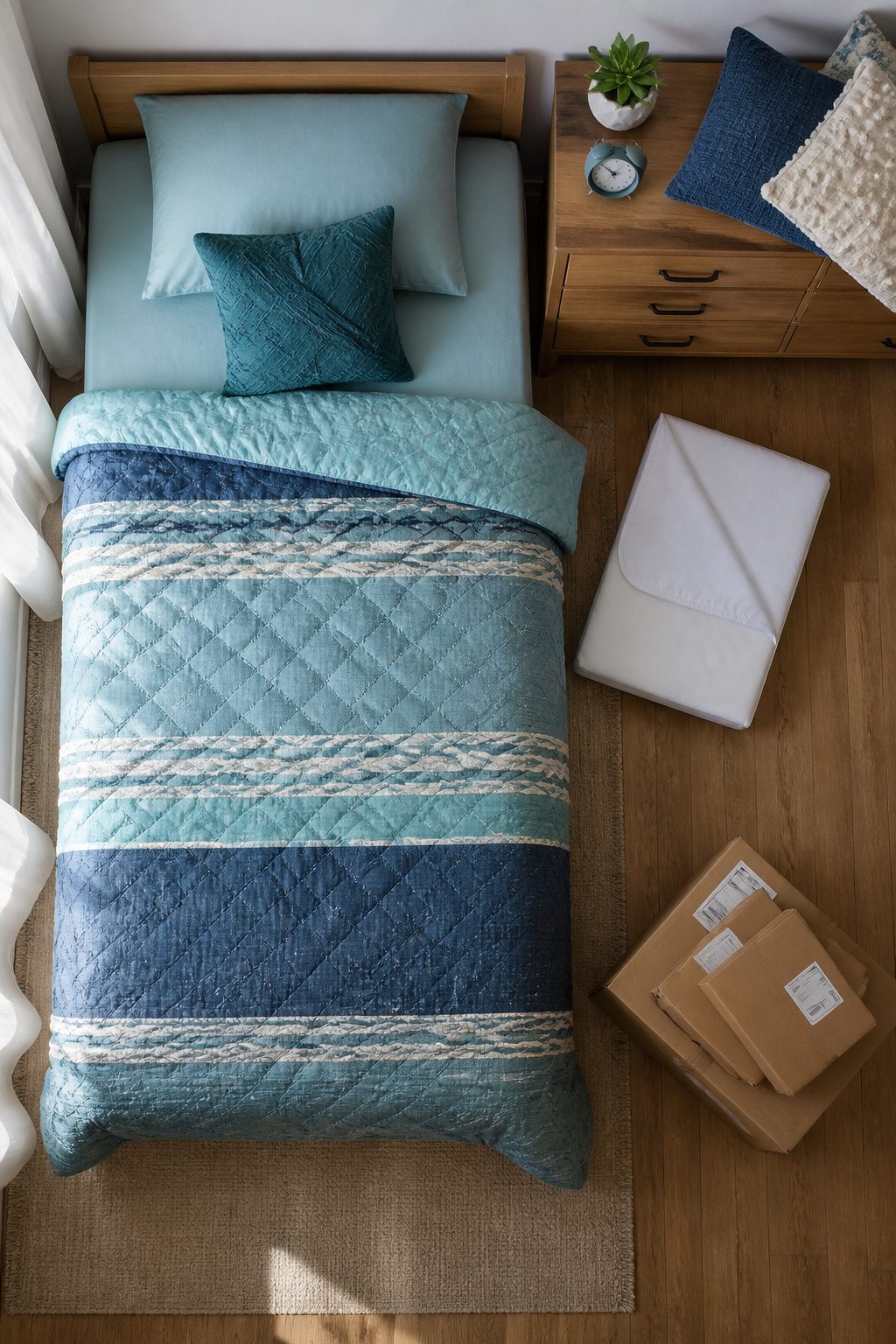
Bedding and the logistics of getting the mattress into your room can quietly add another hundred dollars or more to the total.
Sheets, a protector, and a basic comforter for a twin bed run about $60–$90 if you catch a sale, and a waterproof mattress protector is worth buying upfront since it keeps the warranty valid.
Shipping itself is usually buried in the mattress price these days, but not always: smaller brands or rural delivery can still tag on $50–$100, and that line item sometimes only appears at checkout.
White-glove delivery, which includes in-room setup and optional old mattress removal, is the cost that surprised me most. It runs $100–$150 at most retailers, though membership programs like Sam’s Club Plus occasionally bundle it free on select models.
If you are on a tight budget, carrying the box upstairs yourself and dragging the old mattress to the curb saves the fee, but measure your stairwell first: a compressed twin in a box is manageable solo, but a flimsy bag handle will tear on step three if you are not careful.
Recommended Products

[Firm Support]: Built for those who prefer a firm sleeping surface, this hybrid mattress delivers that firm feel that promotes superior spinal alignment and minimizes sinkage.

COMFY HYBRID MATTRESS – The GAESTE Twin Mattress blends durable innersprings with cushioning memory foam layers. It provides stable, even support from head to toe with a balanced medium plush feel, ensuring the pressure relief and improved sleep quality.

【Hybrid construction enhances comfort】: Indulge in the ultimate sleep experience with the Novilla twin hybrid mattress, which combines comfort foam and individually pocketed springs. This mattress twin will cater to your every need, offering the perfect blend of support and plush.
Frequently Asked Questions
Recommended Products

Total Pressure Point Relief: Unique 5-zone design is optimized to provide compliant support across the entire body (head and neck, torso, hips, upper legs, feet and calves). Our swirl memory foam mattress topper readily conforms to the curves and shape of your body and distributes weight evenly to alleviate pressure points for better sleep.

PRESSURE RELIEVING MEMORY FOAM: Plush gel infused memory foam conforms to your curves for personalized comfort that hugs you to sleep; use it to rejuvenate an old mattress, soften a too-hard mattress, or prolong the life of your mattress

GEL MEMORY FOAM MATERIAL: Our memory foam mattress topper readily conforms to the curves and shape of your body, distributes weight evenly to alleviate pressure points for better sleep.
What size is a twin bed?
A twin bed measures 38 inches wide by 75 inches long, though some retailers round the width up to 39 inches. That variation matters when you are fitting a tight space, so measure your frame or room before you buy.
At that size, it is the smallest standard mattress available and fits children, single adults, and bunk bed setups where overhead clearance is limited.
How long is a twin bed?
A twin bed is 75 inches long, which fits sleepers under six feet comfortably.
Anyone taller will want the twin XL instead, which adds five inches of length. The 75-inch length is why twins work in 7-by-10-foot rooms with walking room to spare, and why college dorms and rental units standardize on them.
How wide is a twin mattress?
The standard width is 38 inches, though some retailers list it at 39 inches. That inch of variation can make the difference between a mattress fitting its frame or overhanging the edge.
Either way, the narrow width is what lets a twin squeeze into small kids’ rooms, studio apartments, and guest spaces where a larger bed would dominate the floor plan.
Which twin mattress is the best for me?
The right twin mattress depends on who sleeps on it, how they sleep, and how long you plan to keep it.
Side sleepers and those who run cold often prefer memory foam for its pressure relief; hot sleepers and those who want bounce tend toward innerspring; active sleepers who want durability usually land on hybrid.
Budget matters too: around $600 gets you denser foams and better edge support, while entry-level models near $250 handle shorter-term needs fine.
Do you have any twin beds on sale?
Twin mattresses go on sale throughout the year, but the best strategy is signing up for email lists from brands you are actually considering rather than waiting for holiday weekends.
Those lists get coupons first, and the discounts often land outside big sale periods when inventory is genuinely moving.
Online retailers usually run lower base prices than brick-and-mortar stores, and free shipping has become standard, which wipes out the cost of driving between furniture rows.
Leave a Reply